Safe and Responsible Driving: theory test questions
420 questions from the Irish Driver Theory Test, each with the correct answer and an explanation.
- When a driver intends to make a left-hand turn at a busy city junction and there are pedestrians, cyclists and e-scooter users present, what should the driver do?Answer: Watch for pedestrians, cyclists and e-scooter users who may try to cross the road in front of the driver’s vehicle.
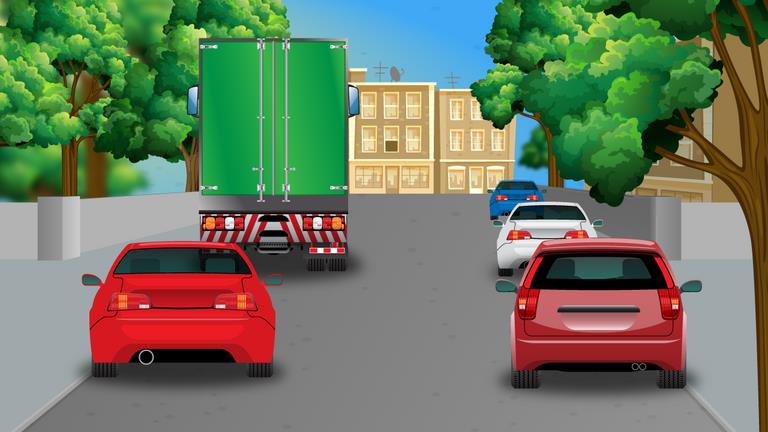
- When a driver is driving in a line of traffic and does not intend to overtake, what should the driver do?Answer: Stay back and leave a gap for other drivers to overtake.
- When a driver wants to turn left into a property and there is a bus lane on the left, what should the driver do?Answer: Give way to cyclists, taxis and buses which may be using the bus lane.
- When driving at night, what is the safest approach for a driver to adopt?Answer: Drive at a speed that enables the driver to stop within the distance ahead that they can see to be clear.
- When driving behind a heavy goods vehicle that is signalling to turn right, what should a driver do?Answer: Stay behind until there is enough space to overtake it on the inside or until it has completed the turn.
- When can a driver travel in the right-hand lane on a dual carriageway?Answer: When overtaking a vehicle in the left-hand lane.
- When driving behind a bus that is signalling to turn left and there is oncoming traffic, what should a driver do?Answer: Stay back and allow it to complete the turn.
- When driving along and wishing to use a hand-held mobile phone, what should a driver do?Answer: Stop at a safe location before using the phone.
- When driving into a narrow gap between oncoming vehicles and vehicles parked on the left. What should a driver do?Answer: Indicate right, stopping if necessary until oncoming traffic has passed by.
- When driving on a country road without footpaths, what should a driver expect coming towards them on their side of the road?Answer: Pedestrians.
- When is the use of the horn prohibited?Answer: Between 11:30 pm and 7:00 am in a built-up area.
- When driving, what effect could icy roads have on the vehicle?Answer: The vehicle would be more likely to skid.
- When driving on this one-way street with vehicles parked on both sides, what should a driver be prepared for?Answer: A vehicle door may open on either side of the street.
- When intending to turn right as shown, what should the car driver do?Answer: Wait and allow the oncoming vehicle to pass.
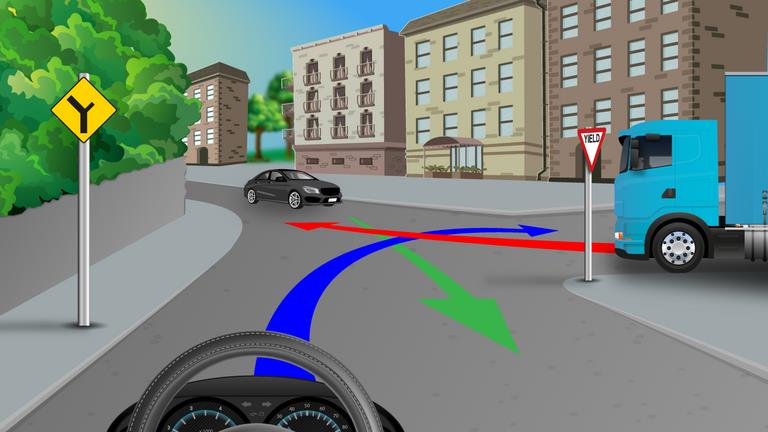
- When is a driver allowed to overtake another vehicle on the left?Answer: When the driver is turning left.
- When wishing to turn right at the end of a one-way street, where should a driver position their vehicle?Answer: Drive as close as is possible to the right-hand side of the road.
- When overtaking a cyclist what should a driver be aware of?Answer: The cyclist may suddenly change direction.
- When should signals (for example, with indicators) be given to other road users?Answer: Clearly and in good time to let other road users know what you intend to do.
- When stopped at traffic lights and the green light comes on but pedestrians are still crossing the road, what should a driver do?Answer: Wait as long as necessary to enable them to complete the crossing.
- When towing a high and wide-bodied trailer what should a driver do?Answer: Make use of extended mirrors to check for following traffic.
- When should a driver use the vehicle side lights?Answer: When parking on an unlit road.
- Where are the blind spots that a driver needs to be aware of when towing a loaded trailer?Answer: The area to the side and rear of the vehicle and the trailer that the driver cannot see.
- Why is tailgating (driving too close behind the vehicle in front) dangerous?Answer: The vehicle will not have enough distance to stop safely in an emergency.
- Which of the following is a possible consequence for a learner driver if they drive after drinking as little as just one unit of alcohol?Answer: A three month disqualification from driving
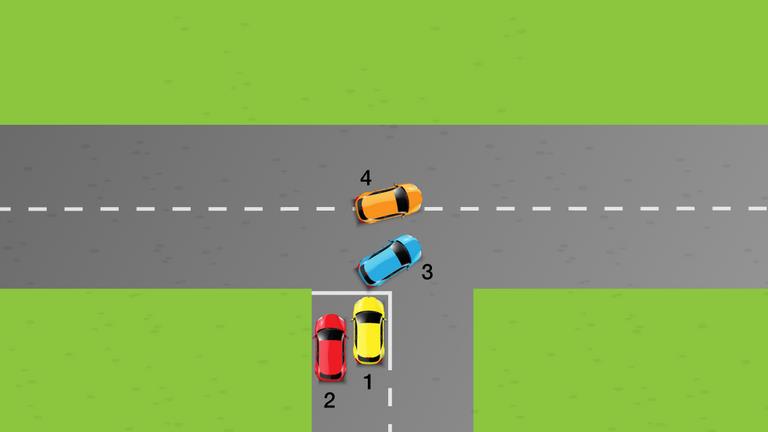
- Which vehicle is in the correct position to make a right turn from a minor road onto a major road?Answer: 1
- Why does it take longer to stop the vehicle on a wet road?Answer: The tyres have less road grip than in dry weather.
- When required to stop in an emergency, what should a driver do?Answer: Apply firm pressure on the footbrake.
- What does a 2-plus-1 road have?Answer: Two lanes of traffic in one direction and one in the opposite direction.
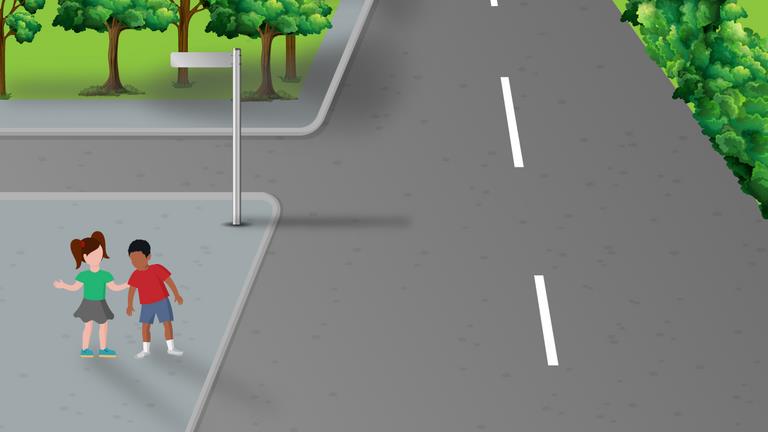
- What is the correct action to take in this situation?Answer: Keep a close eye on the children and be prepared to brake in good time.
- What is the effect of a worn exhaust?Answer: The filtering of fumes is reduced and engine noise is louder.
- What should drivers do if they approach road works and there is earth-moving machinery moving about?Answer: Reduce speed as there may be loose gravel or mud on the road.
- Which of the following road users are most vulnerable in slow-moving city traffic?Answer: Pedestrians.
- What alternatives can drivers take to help protect the environment?Answer: Use public transport.
- What is the main difference between driving on a motorway and driving on other types of road?Answer: Traffic is generally permitted to travel at a higher speed on a motorway.
- What should a driver do if dazzled by lights at night reflecting in their interior mirror?Answer: Temporarily adjust the angle of the mirror.
- At what point is a vehicle load more likely to shift?Answer: When cornering.
- Which action contributes to Eco-Driving?Answer: Looking ahead and anticipating.
- How should a driver proceed if their view is blocked at a junction?Answer: Move out slowly onto the road while watching carefully for other traffic.
- What should a driver do if they wish to drive across a busy road and the traffic lights which normally control the junction are temporarily out of action?Answer: Take good observation, wait for a clear break in the traffic and proceed to cross the road safely.
- What phrase is recommended for drivers to help them determine a safe distance from the vehicle in front on a dry road?Answer: Only a fool breaks the two second rule.
- When driving in the dark on an unlit country road, what should a driver be aware of?Answer: That e-scooter users are much more vulnerable on dark roads.
- What should the car driver do in this situation?Answer: The driver must allow the cyclist to proceed.
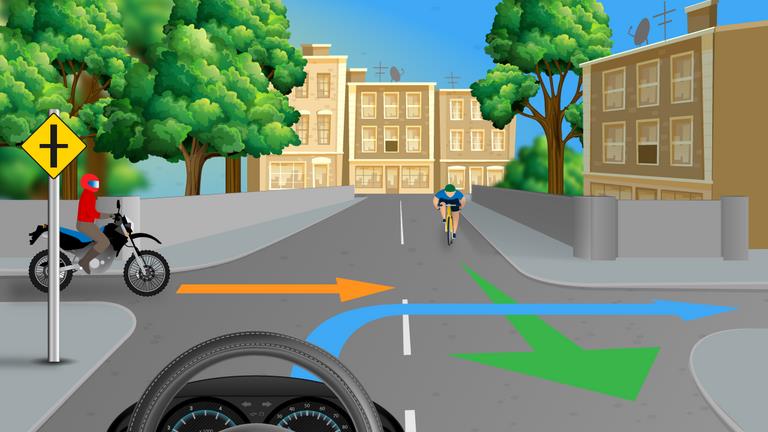
- How can fuel efficiency be improved?Answer: By using gentle acceleration and making gear changes appropriate to speed.
- After a heavy downpour, why should a driver keep a greater distance from the vehicle in front?Answer: Because the required stopping distances is greater.
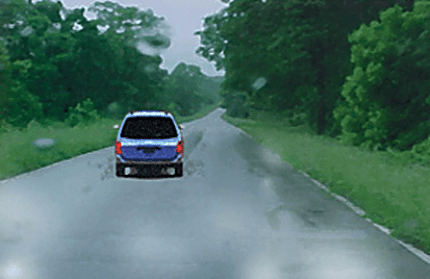
- In this situation, what should the driver in the right-hand lane of the dual carriageway be aware of?Answer: Crosswinds may blow the rider into their path.
- Is a driver permitted to pick up or set down a passenger on a motorway?Answer: A driver is never permitted to pick up or set down passengers on a motorway.
- A driver wishes to go straight ahead at a cross junction of equal importance. If they encounter other traffic, what is the general rule that applies?Answer: Traffic approaching from the driver's right has right of way.
- What are the possible consequences of having incorrectly adjusted headlights?Answer: Oncoming road users could be dazzled.
- When may you pass another vehicle on the left-hand side?Answer: When the vehicle in front is signalling to turn right or in slow moving lanes of traffic.
- Can a driver break a red light or break the speed limit to allow an emergency service vehicle to pass?Answer: No, a driver should never break a red light or speed up to allow an emergency service vehicle to pass.
Ready to test yourself?
Answer Safe and Responsible Driving questions one at a time, check each answer, and revisit your mistakes.
Practise this topic