Safe and Responsible Driving: theory test questions
420 questions from the Irish Driver Theory Test, each with the correct answer and an explanation.
- What lights should a driver use when driving in dense fog?Answer: Drive with dipped headlights and fog lights.
- What safety precaution should a driver take when getting out of their vehicle?Answer: Check all around for approaching traffic and pedestrians before opening the door.
- What may the hard shoulder of a motorway be used for?Answer: Stopping in an emergency.
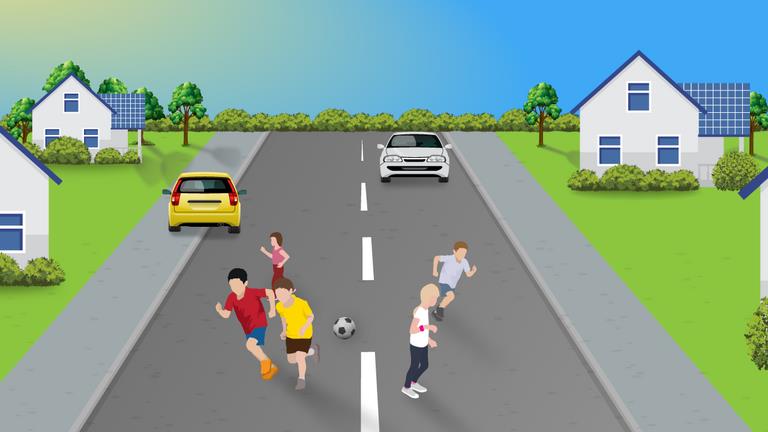
- What must a driver be prepared for in this situation?Answer: A child could turn back to collect the ball from the roadway.
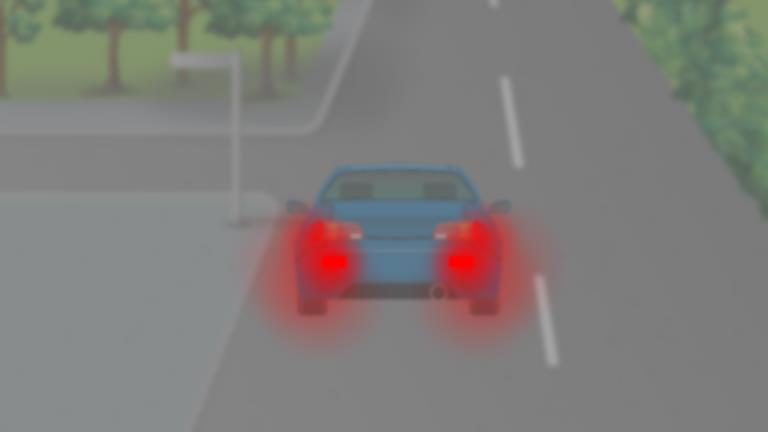
- What lights should a driver use in dense fog?Answer: Front and rear fog lights along with dipped headlights.
- What precautions could a driver take against the risk of fire in their vehicle?Answer: Carry a suitable fire extinguisher in the vehicle.
- What lights should a driver have on when driving behind other traffic at night?Answer: Dipped headlights.
- What should a driver do before starting a journey in poor weather conditions?Answer: Check the weather forecast for the planned route.
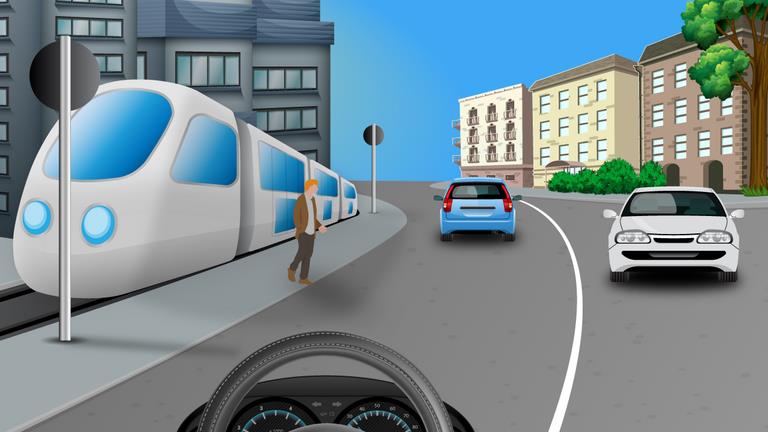
- What should a driver be aware of in this situation?Answer: The pedestrian may leave the traffic island without paying attention.
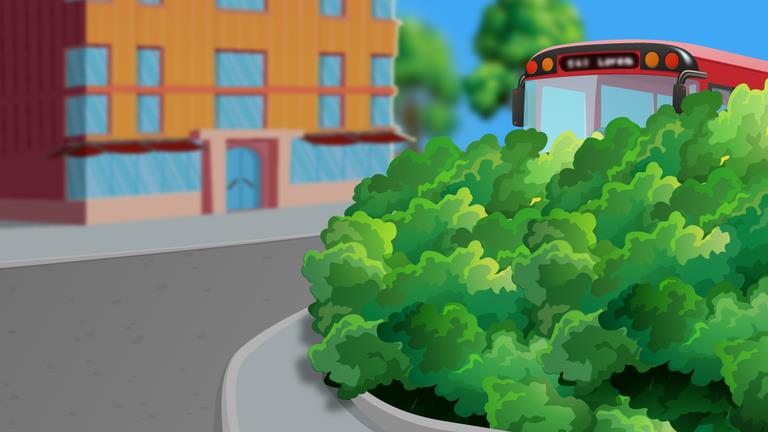
- What should a driver be aware of in this situation?Answer: There may be a car hidden from view in front of the bus.
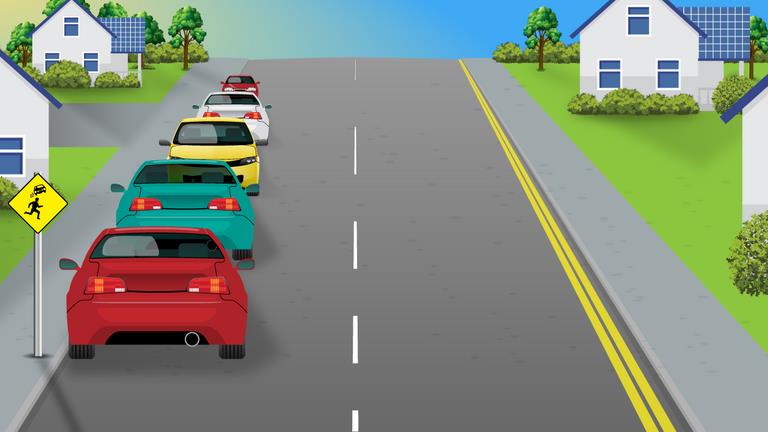
- What should a driver be most aware of in this situation?Answer: Children may unexpectedly run out from between parked cars.
- What should a driver do before starting a journey in bad weather?Answer: Top up the windscreen washer reservoir.
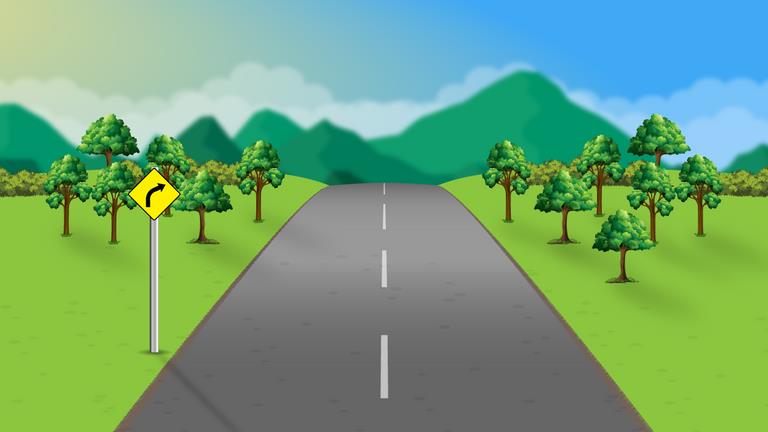
- What should a driver be aware of in this situation?Answer: A dangerous right-hand bend ahead.
- What should a driver be aware of when making a left turn into a side road?Answer: E-scooters may come up on the left (nearside).
- What should a driver be aware of when making a left turn into a side road?Answer: Cyclists may come up on the left (nearside).
- What should a driver do after passing through a flooded section of road?Answer: Apply the brake pedal lightly at slow speed for a short distance to dry the brakes.
- What should a driver be aware of when driving through a section of road where roadworks are ongoing?Answer: Narrower lanes than usual and restricted shoulder areas.
- What should a driver do if their vehicle breaks down in a tunnel?Answer: Use the emergency telephone to call for help.
- What should a driver do if a tyre bursts on the vehicle they are driving?Answer: Hold the steering wheel firmly and pull in on the side of the road.
- What should a driver do if a heavy goods vehicle in front has moved out to make a left turn ahead?Answer: Stay behind it and allow it to complete the turn.
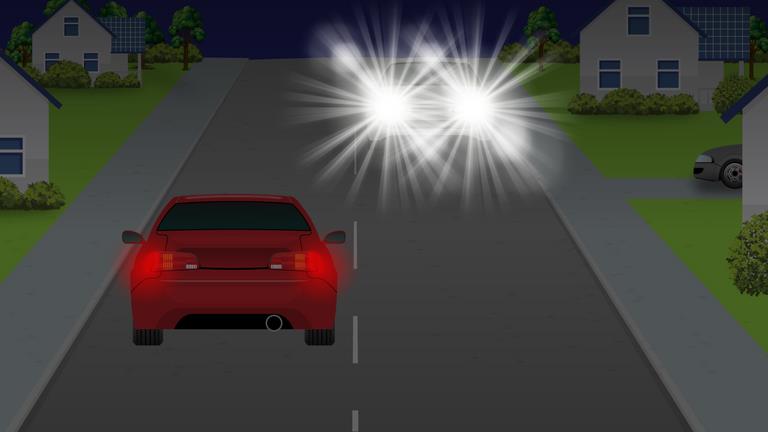
- What should a driver do if dazzled by the lights of an oncoming vehicle?Answer: Look to the left-hand edge (nearside) of the roadway and slow down if necessary.
- What should a driver do if their vehicle breaks down in a tunnel?Answer: Use the emergency telephone to call for help.
- What should a driver do if another vehicle blocks their right of way at a junction?Answer: Be patient and show restraint.
- What should a driver do if the vehicle’s windows and mirrors are covered in ice?Answer: Switch on the heating system and use a scraper to clear the ice before driving.
- What should a driver do if their vehicle breaks down or they are involved in a collision in a tunnel?Answer: Switch on hazard warning lights and walk to emergency station to call for help.
- What should a driver do if a front tyre bursts while driving?Answer: Grip the steering wheel firmly.
- What should a driver do when they see a slow moving vehicle up ahead being driven by a learner driver?Answer: Maintain a distance behind to avoid undue pressure.
- What should a driver do if their vehicle is broken down on a motorway and they are awaiting assistance?Answer: Switch on the vehicle hazard warning lights, get out of the vehicle and stand safely to the side.
- What should a driver do if they are taking a medication which can make them feel drowsy?Answer: Do not drive a vehicle.
- What should a driver do if there is black ice on the road?Answer: Avoid harsh braking, steering and acceleration.
- What should a driver do if their vehicle gets into a rear-wheel sideways skid?Answer: Turn the steering wheel in the same direction as the rear wheels are heading.
- What should a driver do if their vehicle gets into a front-wheel sideways skid?Answer: Release the accelerator.
- What should a driver do if they drive past their intended exit by mistake?Answer: Drive on and leave at the next exit.
- What should a driver do if there is a large oil spill on the road?Answer: Reduce speed by gently applying the brakes and switch on the hazard warning lights.
- What should a driver do if there is very heavy traffic congestion in a tunnel?Answer: Switch on hazard warning lights.
- What should a driver do if they are first in line to turn right at traffic lights while the green light is showing and there is oncoming traffic approaching?Answer: Go forward towards the centre of the junction and turn safely when a suitable gap appears.
- What should a driver do if they intend to reverse their vehicle into an area which they cannot see?Answer: Ask someone to guide you when reversing.
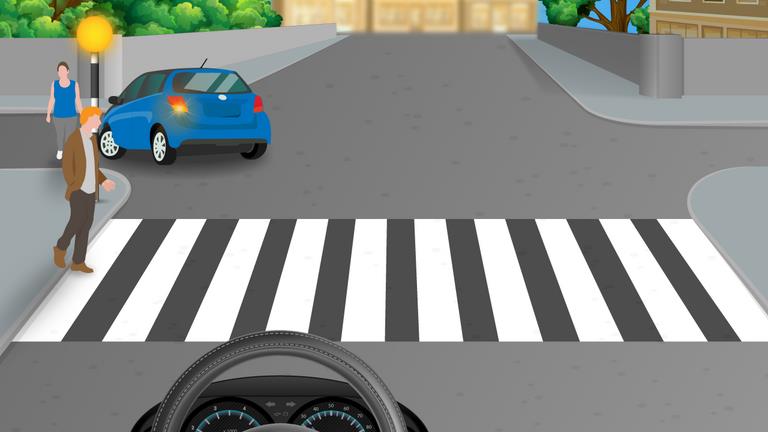
- What should a driver do in this situation?Answer: Allow the pedestrian to cross the road.
- What should a driver do if they see horse riders on the road ahead?Answer: The driver should reduce speed, allow extra clearance and pass with care.
- What should drivers be aware of if they meet horses with riders on the road?Answer: Drivers should be aware that loud noises from their vehicle may frighten the horses and cause them to bolt.
- What should a driver do in a queue of traffic controlled by traffic lights?Answer: A driver should maintain their position in the queue.
- What should a driver do if they feel tired before starting a journey?Answer: Do not start the journey until they are rested.
- What should a driver do if traffic comes to a halt in a tunnel?Answer: Switch off the engine.
- What should a driver do if they see a school bus stopped on the nearside (left side) of the road ahead?Answer: Reduce speed and overtake with caution.
- What should a driver do in the event of a breakdown or incident in a tunnel?Answer: Switch off the engine and switch on the hazard lights.
- What should a driver do if they see a red warning triangle on the road?Answer: The driver should slow down and expect a hazard up ahead.
- What should a driver do when driving at night on an unlit road?Answer: Watch out for unlit e-scooters.
- What should a driver do when being overtaken by another vehicle?Answer: Continue at the same pace.
- What should a driver do when approaching traffic lights stuck on red?Answer: Stop and proceed with great caution.
- What should a driver do to avoid having to make an emergency stop?Answer: Scan the road well ahead.
Ready to test yourself?
Answer Safe and Responsible Driving questions one at a time, check each answer, and revisit your mistakes.
Practise this topic