Safe and Responsible Driving: theory test questions
420 questions from the Irish Driver Theory Test, each with the correct answer and an explanation.
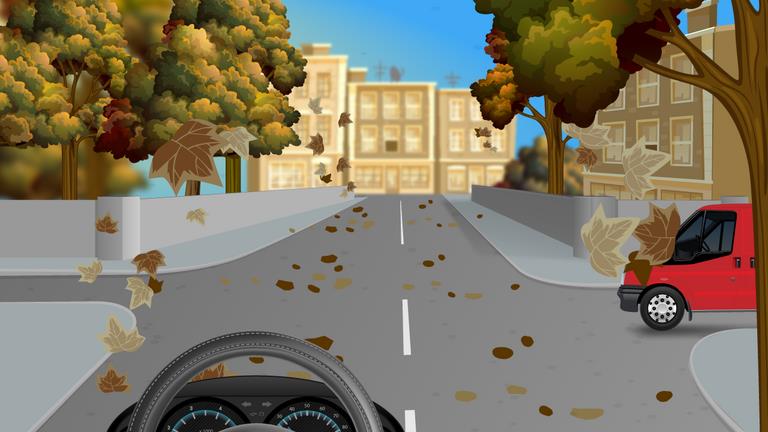
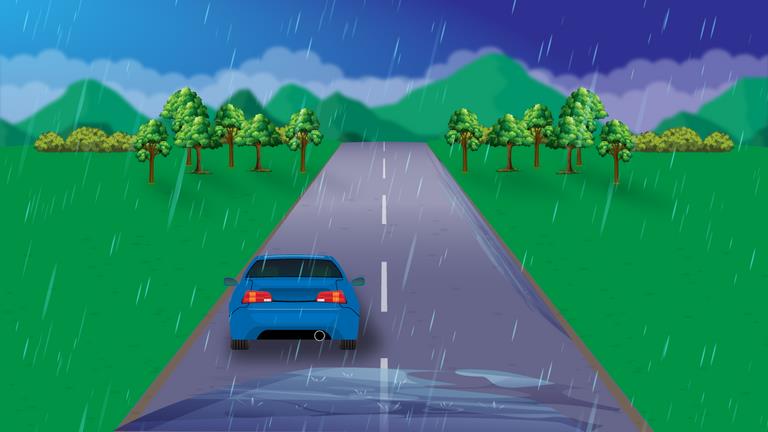
- Why must a driver be particularly careful here?Answer: Because there is an increased danger of skidding.
- What should a driver do on a narrow road when another vehicle is coming in the opposite direction?Answer: Reduce speed and allow reasonable clearance between their vehicle and the oncoming one before proceeding.
- What should a driver do in order to keep alert during a long journey?Answer: Increase the air circulation and stop if necessary.
- What should a driver do if they get a tyre blow-out on the road?Answer: Apply the footbrake gently and bring the vehicle to a halt.
- What should a driver do if they meet a vehicle with flashing amber beacons?Answer: Slow down and prepare to stop.
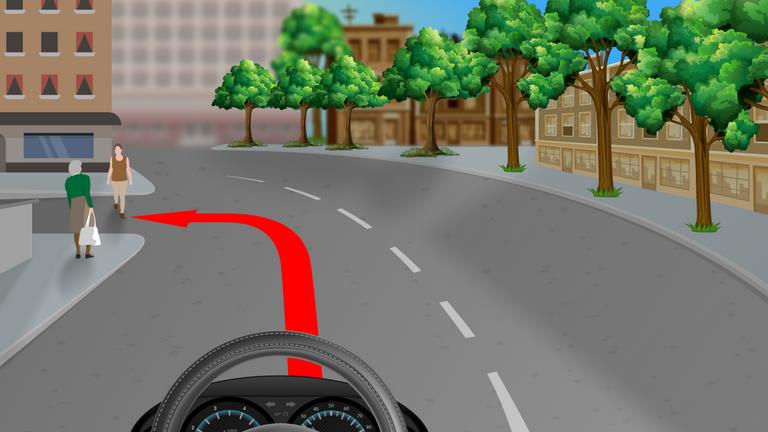
- What should a driver do in this situation when intending to turn left?Answer: Yield to pedestrians already crossing.
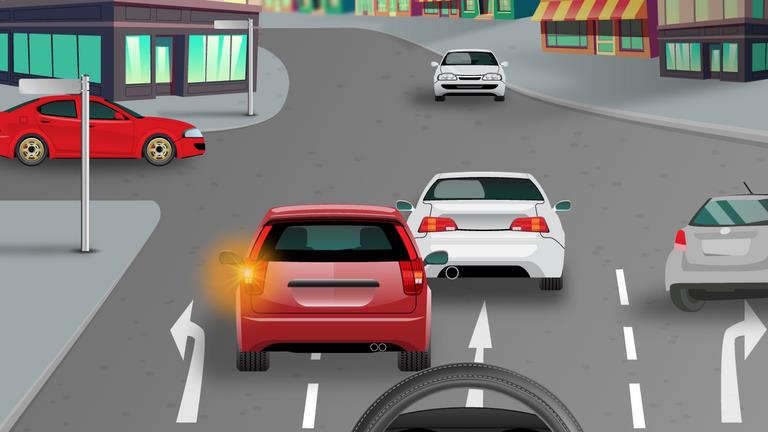
- What should a driver do when continuing straight ahead in the middle lane?Answer: Slow down and allow the driver in front to change lanes.
- What should a driver do when driving in heavy rain?Answer: Be aware that the vehicle may slide or 'aquaplane'.
- What should a driver do when driving at night on an unlit road?Answer: Watch out for unlit cyclists.
- What should a driver do when driving at night on an unlit road?Answer: Watch out for pedestrians wearing dark clothing.
- What should a driver do when driving on a wide road behind a vehicle that has signalled to turn right ahead?Answer: Overtake on the left-hand side and carry on if safe to do so.
- What should a driver do to avoid having to make an emergency stop?Answer: Keep a safe distance from the vehicle in front.
- What should a driver do when approaching a junction normally controlled by traffic lights and the traffic lights are not lighting?Answer: Treat it as an unmarked junction and proceed cautiously while watching out for other traffic.
- What should a driver do to ensure better fuel efficiency from their vehicle?Answer: Ensure that the vehicle is regularly serviced.
- What should a driver do when feeling tired within a short distance from their destination?Answer: Stop in a safe place and take a break.
- What should a driver do when there are dark clouds and visibility is reduced during daylight hours?Answer: Drive with dipped headlights switched on.
- What is the recommended minimum stopping distance for a car travelling at 50 km/h on a dry road?Answer: 25 metres.
- What should a driver do when driving in slippery road conditions?Answer: Drive at lower speeds and use gentle acceleration and braking.
- How does giving a late signal affect other road users?Answer: They may not have been given enough time to react.
- What should a driver do if they see a truck reversing into a side entrance on the left-hand side of the road ahead?Answer: Stop and stay back safely and wait until the way is clear.
- Which action is likely to cause an increase in fuel consumption?Answer: Harsh acceleration.
- What should the driver do if there are cattle on the road ahead?Answer: The driver should reduce speed and pass them with care.
- Where is black ice likely to occur on the road?Answer: In sheltered or shaded areas.
- What should a driver do if their vehicle breaks down in a tunnel?Answer: Switch on the hazard warning lights.
- What can be achieved by the driving style known as ‘Eco-Driving’?Answer: Increased fuel efficiency.
- What should a driver do when entering a tunnel?Answer: Keep a safe distance from the vehicle in front.
- When meeting oncoming traffic on a national road, is it permitted to move into the hard shoulder to allow following traffic to overtake?Answer: Yes, temporarily when the hard shoulder is clear and it is safe to drive there.
- What should a driver do if they experience micro-sleep whilst driving?Answer: Stop in a safe place.
- A driver is automatically disqualified from driving for how long if, on a first offence, they refused to provide a member of An Garda Síochána with a sample of blood, urine or breath?Answer: 4 years
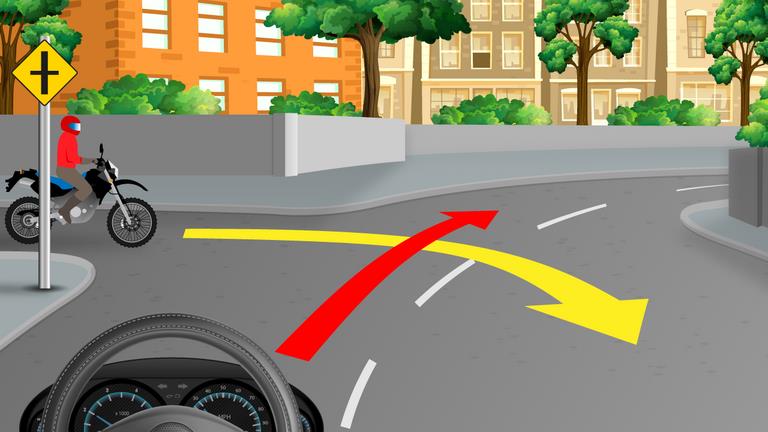
- As the driver of the car, which conduct is correct?Answer: A driver may proceed with caution
- After a heavy downpour, why should a driver keep a greater distance from the vehicle in front?Answer: Because wheel-spray may impair visibility.
- A learner permit driver who receives 7 penalty points in a 36 month period (three years) will be banned from driving for how many months?Answer: 6 months.
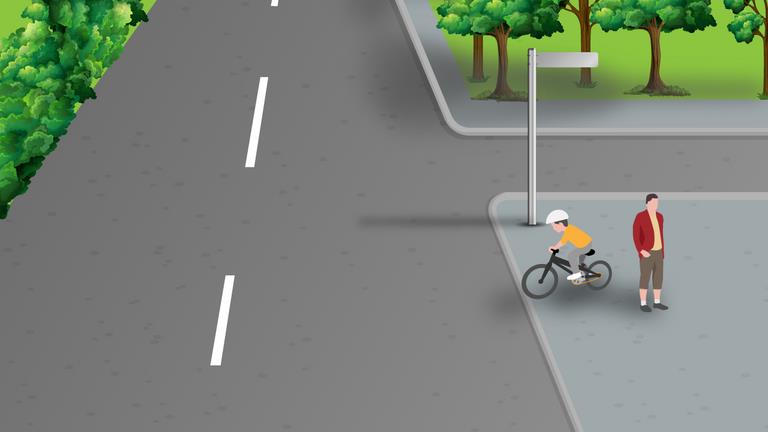
- An approaching driver notices that the boy on the children’s bicycle has said goodbye to his friend. What is the correct action for the driver to take?Answer: Be prepared for the boy setting off at any moment.
- Along with an impairment test, what may a Gárda request if they suspect a driver of driving under the influence of drugs?Answer: A saliva sample.
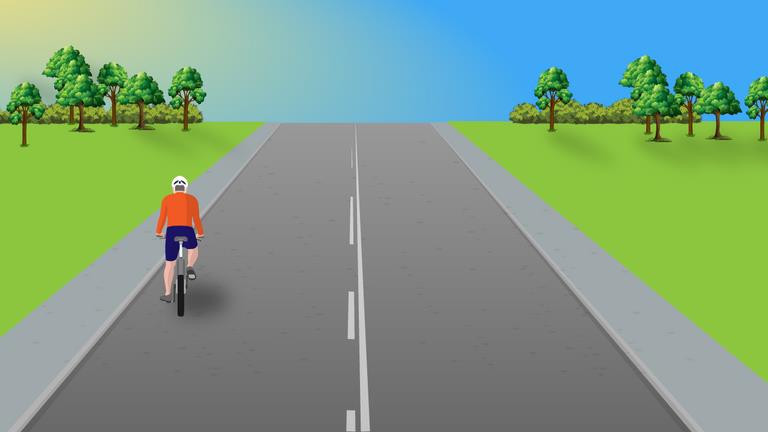
- How should a driver overtake the cyclist in this situation?Answer: By crossing the broken white line.
- In what direction should a driver turn when entering a roundabout?Answer: To the left.
- How many penalty points will an unaccompanied learner driver receive on conviction?Answer: 4 penalty points.
- How can a driver help the environment?Answer: By reducing speed.
- How should a driver manage a bend when driving a fully loaded vehicle?Answer: At a slower speed than when empty.
- Can An Gárda Síochána conduct roadside testing for drugs and alcohol in the mornings?Answer: Yes, they can check at any time.
- Before exiting the vehicle on a busy road, what should the driver ensure?Answer: Before opening the door the driver should check it is safe to do so.
- How should a driver apply the brakes in an emergency if the vehicle is fitted with anti-lock brakes (ABS)?Answer: Press the brake pedal firmly and hold.
- What is the maximum disqualification period imposed in court where the learner driver has a blood alcohol concentration (BAC) level in excess of 80 mg?Answer: Six years
- In dry weather how might a driver judge what is a safe following distance to vehicle in front?Answer: By using a fixed point and applying the two second rule.
- If it is safe to overtake a cyclist in speed zones over 50 km/h, what is the recommended minimum passing distance?Answer: Allow a minimum of 1.5 metres.
- If a motorist or a motorcyclist is taking medication which may affect their driving, what should they do?Answer: Seek medical advice in relation to driving.
- If the vehicle’s windows are covered with ice, what should the driver do?Answer: Fully clear ice from all windows.
- In slow-moving city traffic, a driver should occasionally check their blind spots for which road users in particular?Answer: E-scooters.
- If the owner of a vehicle allows a learner driver to drive their vehicle, what is the maximum fine the owner could face?Answer: €1,000
- What advice should a driver give to passengers before opening doors?Answer: Check all around and open door with caution.
Ready to test yourself?
Answer Safe and Responsible Driving questions one at a time, check each answer, and revisit your mistakes.
Practise this topic