Safe and Responsible Driving: theory test questions
420 questions from the Irish Driver Theory Test, each with the correct answer and an explanation.
- In general how regularly should a vehicle be serviced?Answer: As per the manufacturer's recommendation.
- In slow-moving city traffic, a driver should occasionally check their blind spots for which road users in particular?Answer: Cyclists.
- If there is no footpath, where must a pedestrian walk?Answer: Right-hand side of the road.
- What should a driver do if their vehicle goes on fire in a tunnel?Answer: Leave the vehicle and follow the emergency escape route.
- In normal driving conditions on a motorway, which lane should the driver occupy?Answer: Drive in the nearside (left-hand) lane unless intending to overtake.
- Is a learner driver permitted to drive unaccompanied if they have the consent of the vehicle owner?Answer: No, a learner driver is not permitted to drive unaccompanied even with the owner's consent.
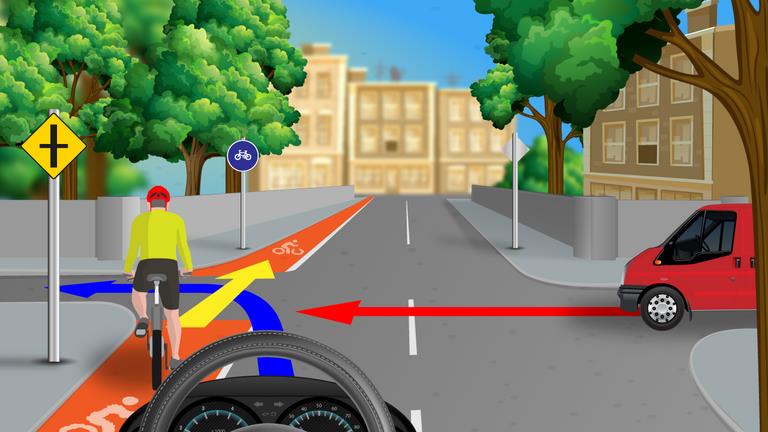
- The driver intends to turn left at this junction – what should the driver do?Answer: Allow the cyclist to continue before turning left.
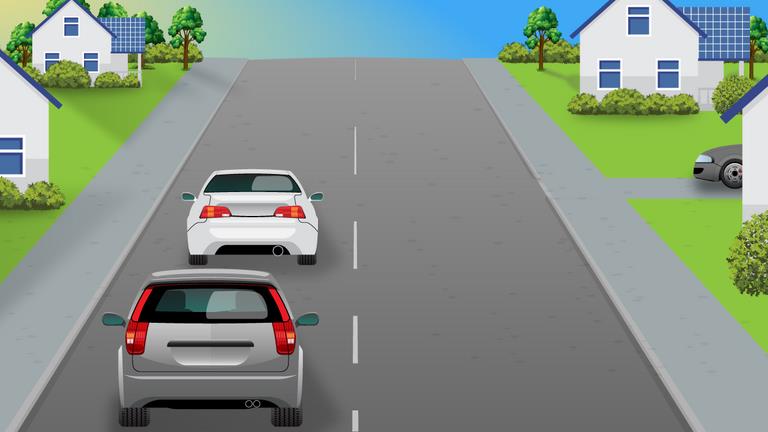
- The driver is following these two vehicles and wishes to overtake – what must the driver consider before overtaking here?Answer: The driver's field of view is not good enough to allow safe overtaking.
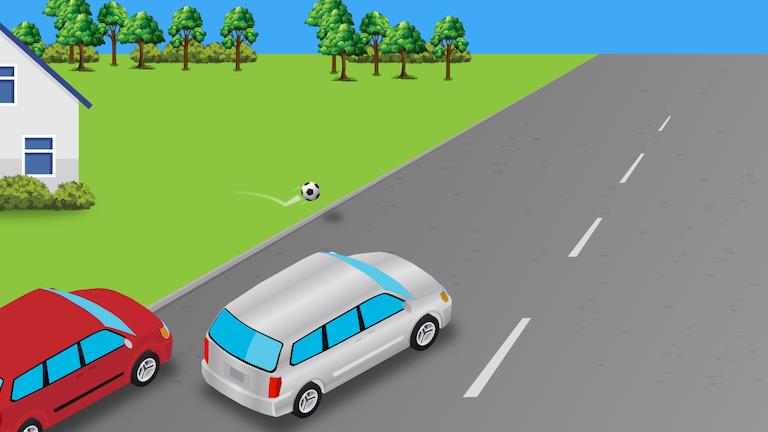
- The silver car is overtaking the parked red car, what should the driver do in this situation?Answer: Reduce speed considerably and be ready to stop.
- Is a driver allowed to exceed the speed limit when overtaking?Answer: The driver may not exceed the speed limit when overtaking.
- Subject to the speed limit, what is the “safest” speed to drive at?Answer: The speed that will enable the driver to stop the vehicle within the distance ahead that they can see to be clear.
- The driver intends to turn right at this junction – what should the driver do?Answer: Stop at the line.
- On a busy road, how should a driver allow passengers out of a vehicle?Answer: Stop and allow them to get out on the side nearest the kerb.
- On a narrow busy road, what should pedestrians do when walking?Answer: Walk in single file.
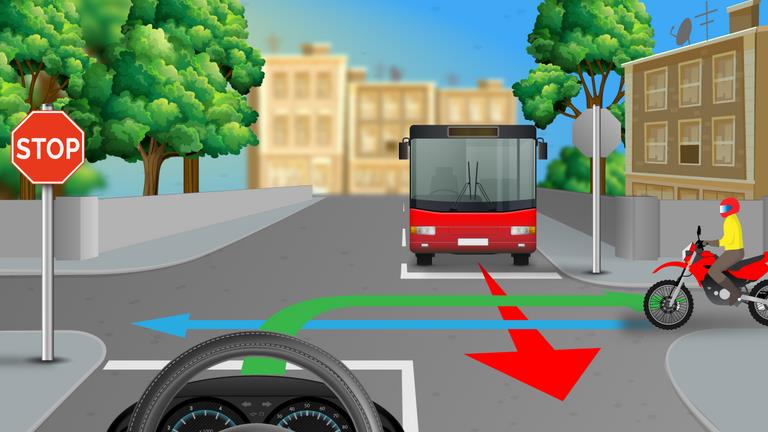
- The driver intends to turn right at this junction – what should the driver do?Answer: Proceed after the motorcycle and bus have passed.
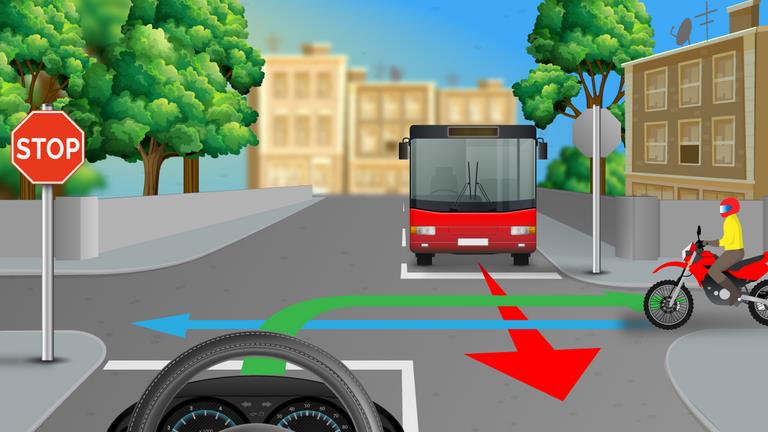
- What action should the driver take?Answer: Stop at the Stop line.
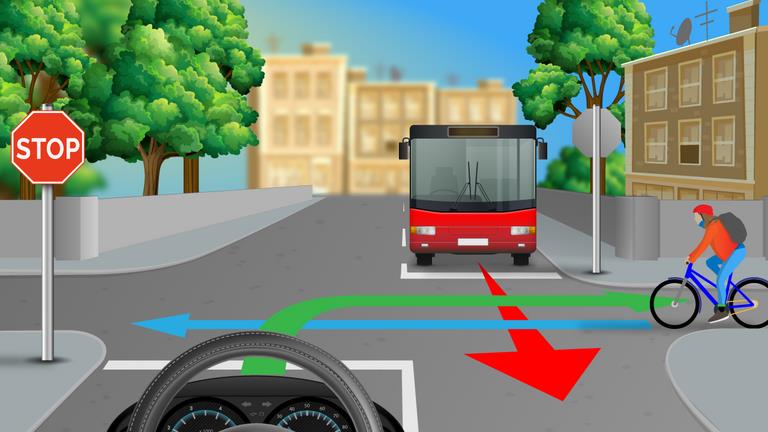
- What can a driver do to maximise fuel efficiency while driving?Answer: Avoid carrying unnecessary weight.
- What action should a driver take when they meet a vehicle with flashing blue lights?Answer: Move to the left, reduce speed and stop if necessary.
- What action should a driver take if the engine in their vehicle cuts out suddenly when they are driving along?Answer: Signal and steer the vehicle to the side of the road.
- What are the drink driving penalties for a learner driver with a blood alcohol concentrate (BAC) of 20 mg to 80 mg per 100 millilitres of blood?Answer: €200 fine and 3 months driving disqualification.
- What are the drink driving penalties for a driver with a blood alcohol concentrate (BAC) of 80 mg to 100 mg per 100 millilitres of blood?Answer: €400 fine and 6 months driving disqualification.
- To whom should a driver report aggressive driving?Answer: Local Garda Station or Traffic Watch.
- What should a driver do if their vehicle is forced to stop in a tunnel due to a breakdown or a crash?Answer: Call for help from an emergency station.
- What action should a driver take on approach to the brow of this hill?Answer: Reduce speed as possible hazards ahead.
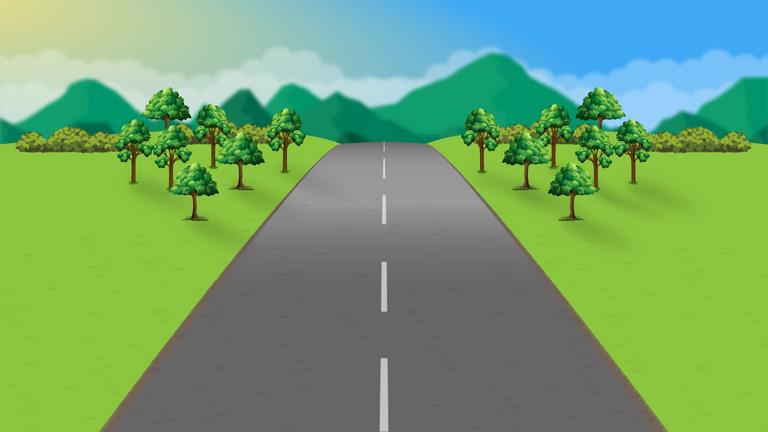
- What do flashing amber beacons on an oncoming vehicle alert a driver to?Answer: That the oncoming vehicle may be slow moving or extra wide.
- What clearance should drivers normally allow for when passing parked vehicles?Answer: A door width.
- What does a 2-plus-1 road have?Answer: Two non-motorway lanes in one direction and one non-motorway lane in the opposite direction.
- What should a driver do if a bus in front has moved out to make a left-hand turn and there is oncoming traffic?Answer: Stay back and allow the bus to complete the turn.
- What could happen if a driver parks on a footpath?Answer: Pedestrians could be prevented from passing.
- What effect does a worn exhaust have on a vehicle?Answer: It causes noise and gas pollution levels to increase.
- What should a driver be alert to in this area?Answer: Pedestrians may cross between parked cars.
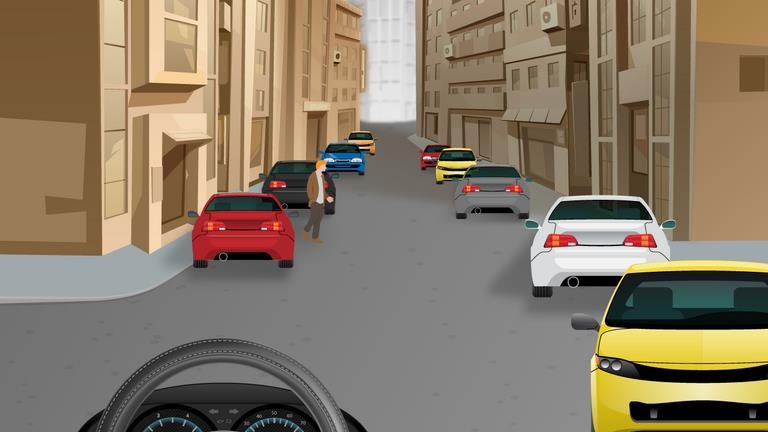
- What effect could a front-tyre blow-out have on a vehicle?Answer: The steering wheel will pull to one side.
- What effect can wet weather have on the vehicle’s exterior mirrors?Answer: It can distort the rear vision of the driver.
- What effect does drinking alcohol have on a driver?Answer: It reduces concentration.
- What effect can a faulty exhaust system have?Answer: It can increase the vehicle's noise and pollution levels.
- What effect does spilt diesel have on a road?Answer: It makes the road more slippery.
- What does this dial provide information on?Answer: Engine revolution.
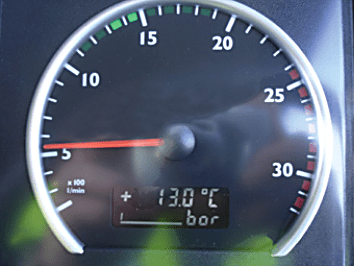
- What is meant by the term jack-knifing?Answer: When the trailer is travelling faster than the drawing vehicle.
- What should a driver do if they are behind schedule in reaching a destination at an appointed time?Answer: Be patient and do not exceed the speed limit so as to arrive safely.
- What effect does a wet road surface have on a vehicle’s braking ability?Answer: Generally, it doubles the braking distance of that required on a dry surface.
- What is the penalty for a vehicle owner who allows a learner driver to drive their vehicle unaccompanied?Answer: Their vehicle will be seized.
- What is the purpose of a catalytic converter?Answer: To reduce harmful exhaust emissions.
- What is the fine for a learner driver who drives unaccompanied?Answer: 160
- What is the maximum penalty on conviction for drug driving?Answer: €5,000 fine and 6 months in prison.
- What is the purpose of rumble strips on the sides of a carriageway?Answer: To alert drivers that their vehicle is veering out of their lane.
- What should a driver do if they are not travelling as fast as the vehicle in front?Answer: The driver should keep to the left and allow vehicles to overtake if they wish.
- What is the purpose of a catalytic converter?Answer: It filters exhaust gases and reduces air pollution.
- What is the effect on the control of the vehicle if there is a film of water between the vehicle’s tyres and the road surface?Answer: Steering and braking will be less effective.
- What is the safest practice when driving on icy roads?Answer: Drive at a slower speed than usual using gentle acceleration and braking.
- What procedure should a driver follow when intending to overtake an e-scooter travelling in the same direction up ahead?Answer: Check mirrors, signal and move out if it is safe to do so.
Ready to test yourself?
Answer Safe and Responsible Driving questions one at a time, check each answer, and revisit your mistakes.
Practise this topic