Safe and Responsible Driving: theory test questions
420 questions from the Irish Driver Theory Test, each with the correct answer and an explanation.
- What should a driver do to avoid the need for harsh braking?Answer: Look ahead and be prepared for what others may do.
- What should a driver do to minimise fuel consumption in their vehicle?Answer: Use gentle acceleration and braking.
- What should a driver do when an emergency service vehicle approaches with flashing blue lights?Answer: React quickly, safely and carefully to allow the emergency service vehicle to pass.
- What should a driver do when approaching roadworks warning signs?Answer: Reduce speed and be prepared to stop for works vehicles or a flagman.
- What should a driver do to secure the vehicle before leaving it?Answer: Apply the parking brake and switch off the engine.
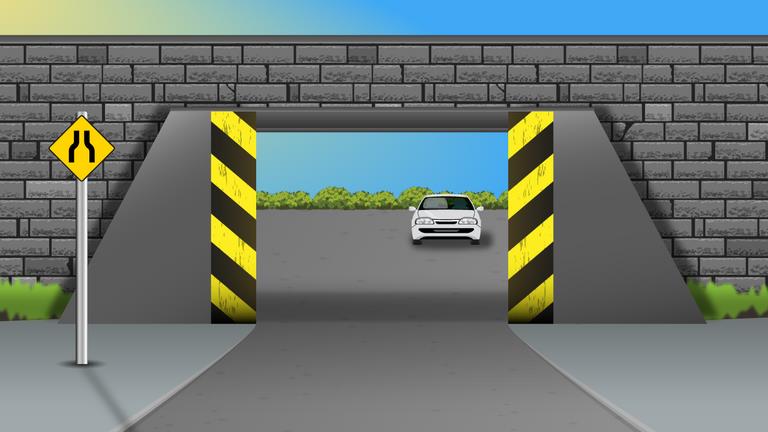
- What should a driver do on the approach to this situation?Answer: Reduce speed and stop if necessary.
- In general, where two lanes are provided on the approach to a roundabout, which lane should a driver select when they intend taking an exit to the right (past the 12 o’clock position) of the roundabout?Answer: The right-hand lane.
- What should a driver do when joining a motorway from a slip road?Answer: Try to match the vehicle speed to that of traffic already on the motorway and merge into it in a suitable gap.
- What should a driver do when suddenly confronted by a hazard on the road?Answer: Decelerate and apply the footbrake firmly.
- What should a driver do when they encounter mud on the road?Answer: Reduce speed and be aware of farm or works vehicles on the road.
- What should a driver do when entering a slip road after leaving a motorway?Answer: Comply with the speed limit on the road the driver is joining.
- What should a driver do when they intend to reverse into a side road?Answer: Check carefully all around before and during the reverse.
- What should a driver do when driving in slippery road conditions?Answer: Use gentle acceleration and braking.
- What should a driver do when driving in dense fog?Answer: Reduce speed and use dipped headlights.
- What should a driver do when overtaking parked vehicles in a residential area?Answer: Allow sufficient clearance when passing.
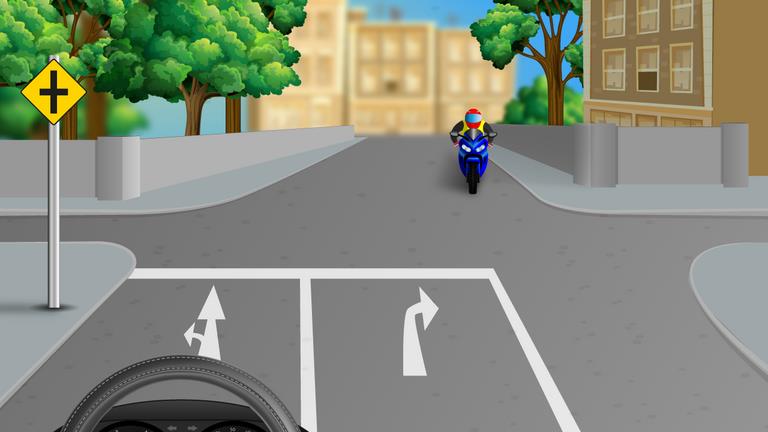
- What should a driver who wants to turn right do in this situation?Answer: Proceed straight ahead or turn left.
- What danger can arise during daylight when a driver enters an area that is heavily shaded by overhanging trees?Answer: Visibility could suddenly be reduced.
- What should a driver ensure when overtaking a cyclist?Answer: Overtake giving them plenty of space.
- What should a driver do when they want to use a mobile phone?Answer: Pull in and stop in a safe place.
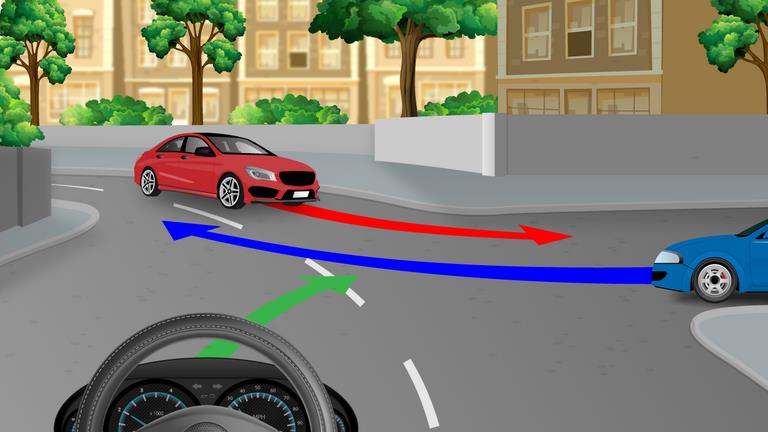
- What should a driver do when turning right at this junction?Answer: Allow the red car to proceed.
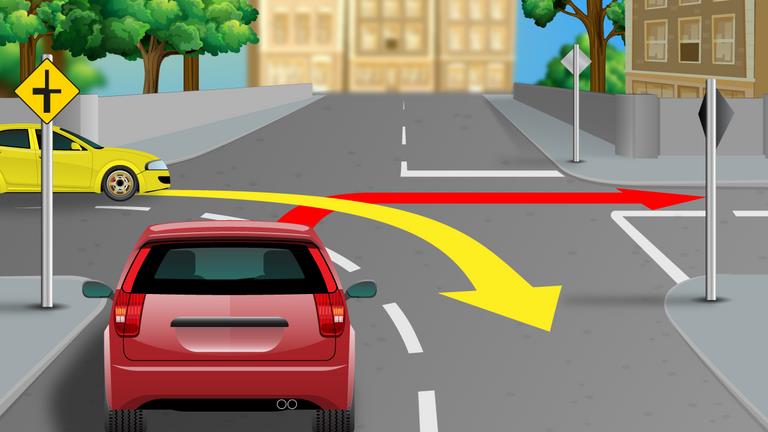
- What should a driver do when travelling behind this vehicle?Answer: Reduce speed and prepare to stop if necessary.
- What should a driver do where a section of road ahead has a shallow flooded area?Answer: Drive in a low gear as slowly as possible keeping the revs high.
- What should a driver never do when an emergency service vehicle approaches with flashing blue lights?Answer: Brake suddenly or block the road.
- What should a rider be aware of when crossing road markings such as lines or arrows?Answer: Tyre grip is reduced.
- What should a driver do when travelling downhill on snow or ice?Answer: Select an appropriate gear and brake gently to control speed.
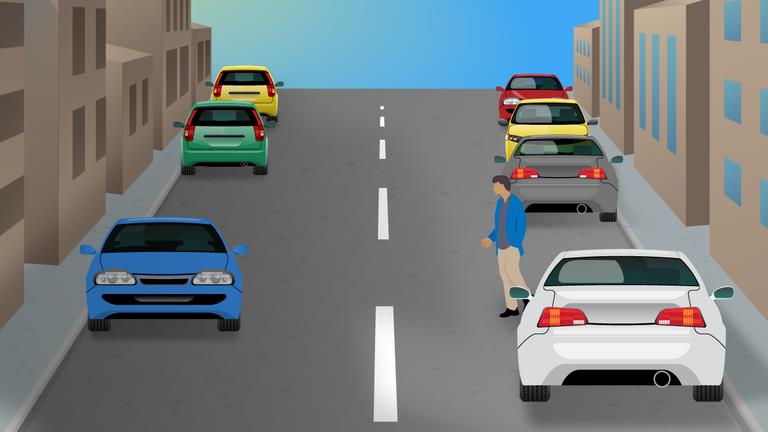
- What should the driver be most conscious of in this situation?Answer: The pedestrian may suddenly cross the road in front of the vehicle.
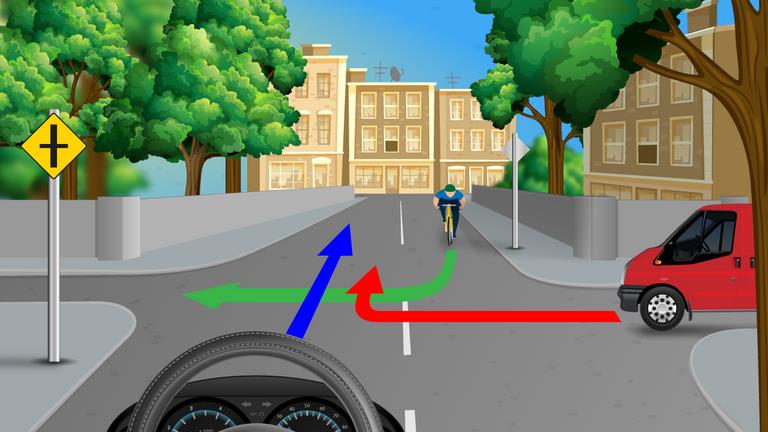
- What should the driver do in this situation?Answer: The driver may continue ahead with caution.
- What should the driver do if they are driving and feel tired?Answer: The driver should stop and take a break.
- What should the driver be able to see in the vehicle mirrors when they are properly adjusted?Answer: The area behind and to each side of the vehicle.
- What should the driver be able to see in the exterior mirrors of a vehicle when they are properly adjusted?Answer: The area to each side of the vehicle.
- What should the driver do in this situation?Answer: The driver may turn right.
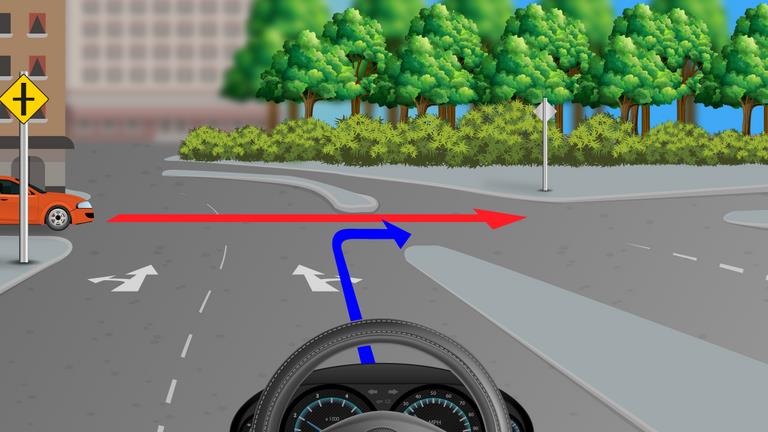
- What should the car driver do in this situation?Answer: The car driver must allow the motorcycle to proceed.
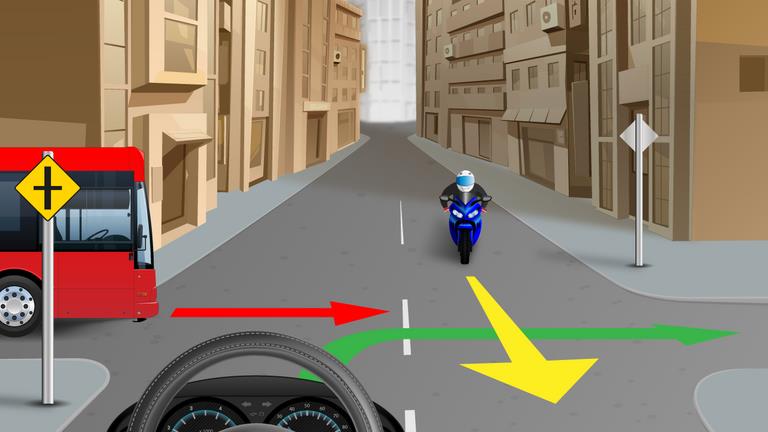
- What should the car driver be aware of in this situation?Answer: Slowing down and being prepared to react.
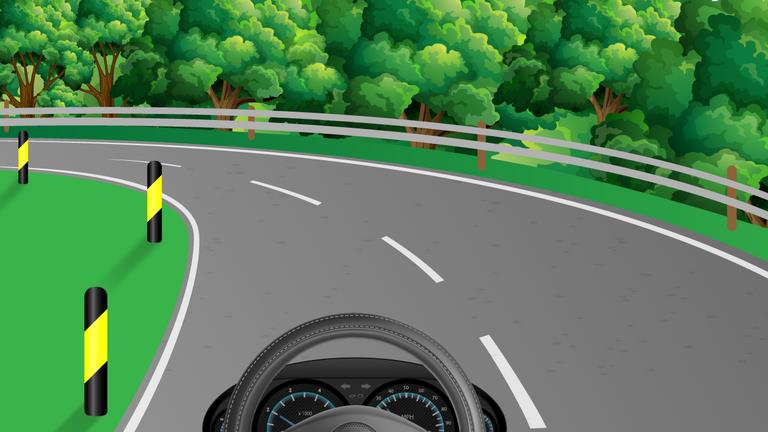
- What should the driver do in this situation?Answer: The driver may turn in front of the other two cars.
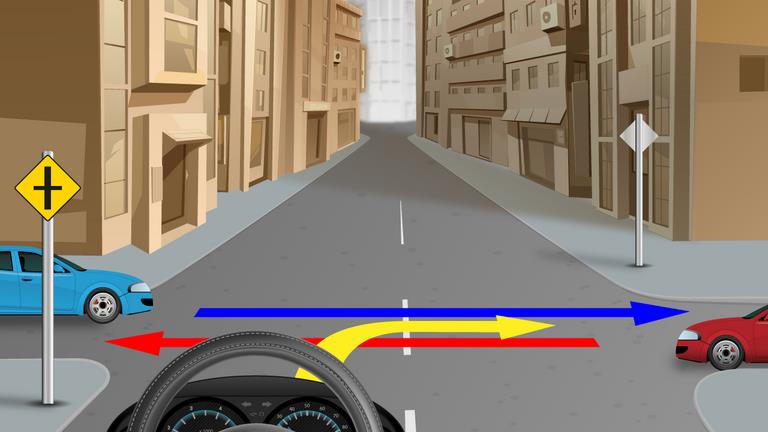
- What should the driver of the silver car do before turning left?Answer: Allow the cyclist heading straight on to pass.
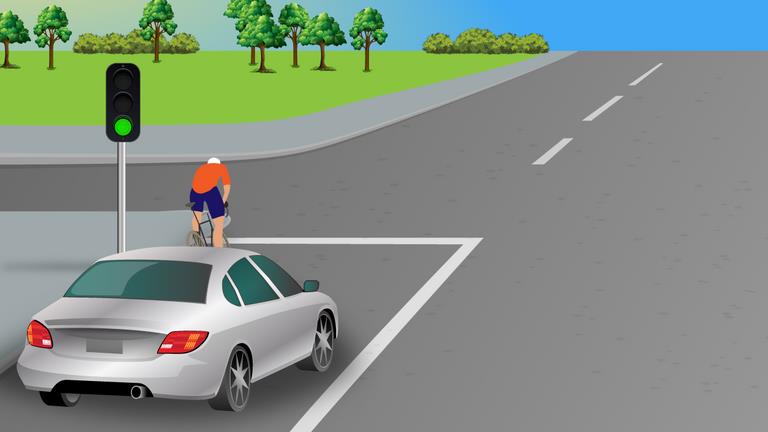
- What specific observations should a driver make before reversing their vehicle?Answer: Look over both shoulders and behind.
- What should the driver do when approaching this situation?Answer: Reduce speed and remain ready to brake since the girl on the footpath could suddenly cross the road.
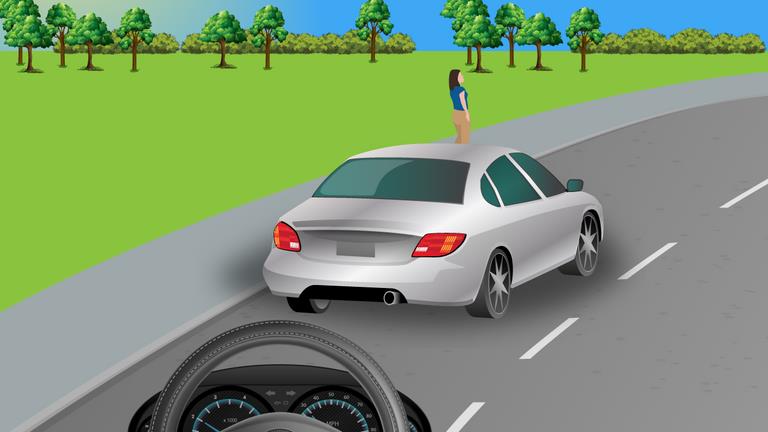
- What would a lightness in the steering MOST likely indicate?Answer: Icy surface.
- What traffic may use a contra-flow bus lane?Answer: Buses on a scheduled service.
- What would happen if a driver cuts in too soon when overtaking another vehicle?Answer: It would force the other vehicle to suddenly slow or change direction causing danger.
- What should the driver do when there is a sharp dip in the road ahead?Answer: Reduce speed, keep to the left and be alert for hazards ahead.
- What should the driver do when driving behind a vehicle that is going from side to side on the road in an unsafe manner?Answer: The driver should stay well back in a safe position.
- When are children allowed to stand with their heads up through an open sun roof?Answer: Children are never allowed to do so.
- When a driver is driving behind another vehicle that they do not intend to overtake, what should the driver do?Answer: Keep well back to allow following traffic to overtake.
- When a driver is at a junction where visibility is extremely limited, what should the driver do?Answer: Move out with extreme care, watching carefully to the left and right.
- When approaching a roundabout, to whom should a driver give way?Answer: The driver must give way to traffic approaching from the right or already on the roundabout.
- When a learner driver has passed their driving test, are they permitted to drive unaccompanied as the holder of a Certificate of Competency?Answer: No, a learner driver is not permitted to drive unaccompanied until they have been issued with a full driving licence in that category.
- When a driver intends to make a left-hand turn on a busy city street junction and there are pedestrians and cyclists around, what should the driver do?Answer: Watch for cyclists or pedestrians who may try to cross the road in front of the vehicle.
- When approaching a bus up ahead that is signalling to move off from a bus stop, what should a driver do?Answer: Slow down and allow it to move out.
- When a vehicle is stopped in a tunnel due to congestion what should a driver do?Answer: Switch on hazard warning lights.
Ready to test yourself?
Answer Safe and Responsible Driving questions one at a time, check each answer, and revisit your mistakes.
Practise this topic