Free road signs guide
Irish road signs and their meanings
Every road sign, road marking and traffic light pictured in the Irish Driver Theory Test (DTT) questions, 143 in all, grouped by type. Select a sign to see its question and a full explanation.
How to read Irish road signs
A sign’s shape and colour tell you what kind of message it gives, even before you can make out the symbol.
- Red circle
- A limit or something you must not do, such as a speed limit, no entry or no overtaking. Speed limits are in km/h.
- Blue circle
- An instruction you must follow, such as turn left, keep left or pass either side.
- Octagon and inverted triangle
- Stop is the only eight-sided sign and Yield the only inverted triangle, so you can recognise both from their shape alone.
- Yellow diamond
- A warning of a hazard ahead, such as a bend, a junction, a school or animals on the road.
- Orange diamond
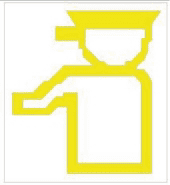
- A temporary warning at roadworks, such as a lane closure, a flagman or loose chippings.
- Blue rectangle
- Motorway signs, and bus, tram and cycle lane signs. Direction signs are blue on motorways, green on national roads and white on regional and local roads.
- White and yellow lines
- Never cross a continuous white centre line; cross a broken one only when it is safe. A single yellow edge line limits parking at the times shown on a nearby plate, and a double yellow line means no parking at any time.
Regulatory signs
Stop, yield, speed limits, turns, and bus, tram and parking rules. These signs tell you what you must or must not do.
 The driver must stop their vehicle
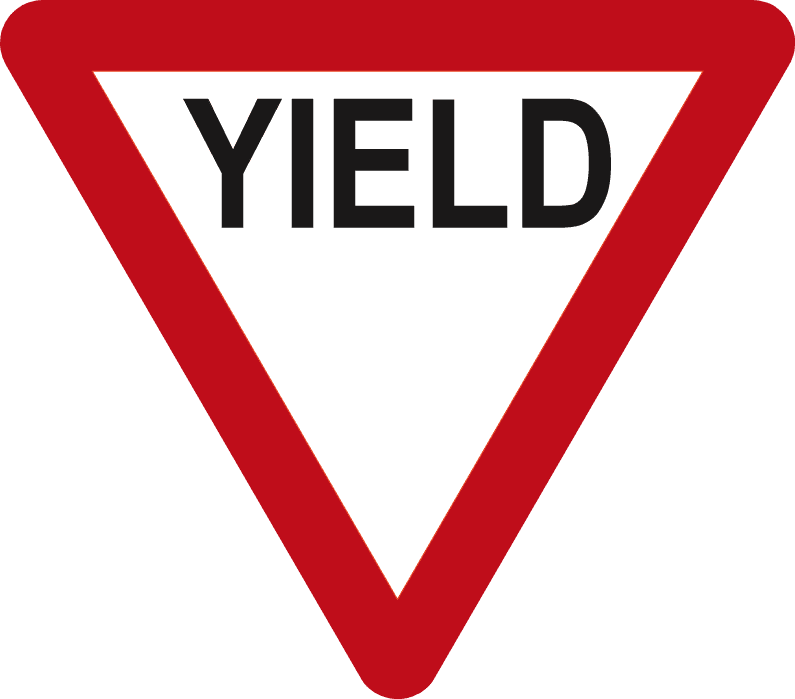 Yield to traffic coming from the right, or already on the roundabout
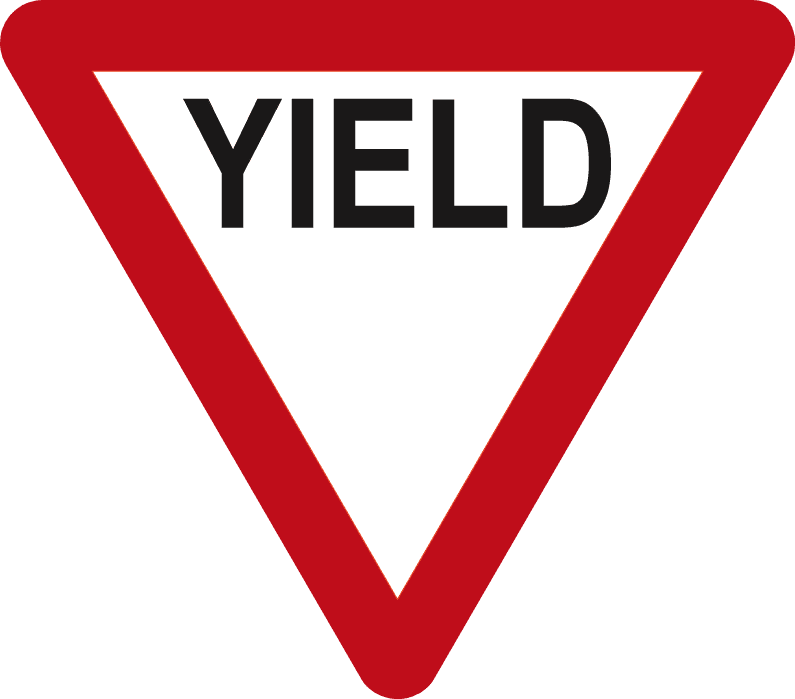 Yield to traffic on the major road
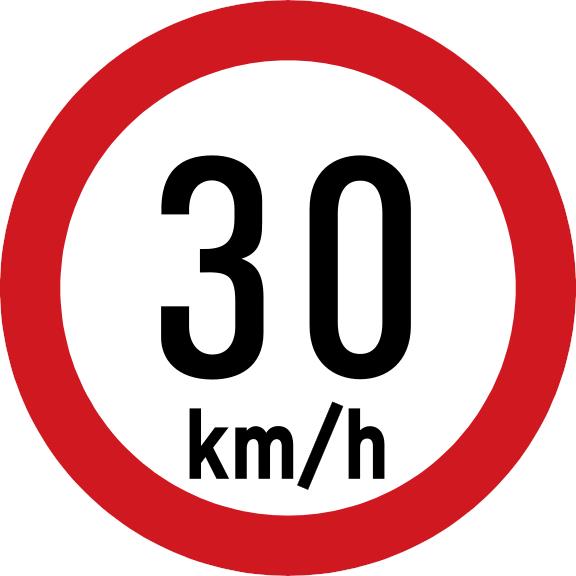 Maximum speed is 30 km/h
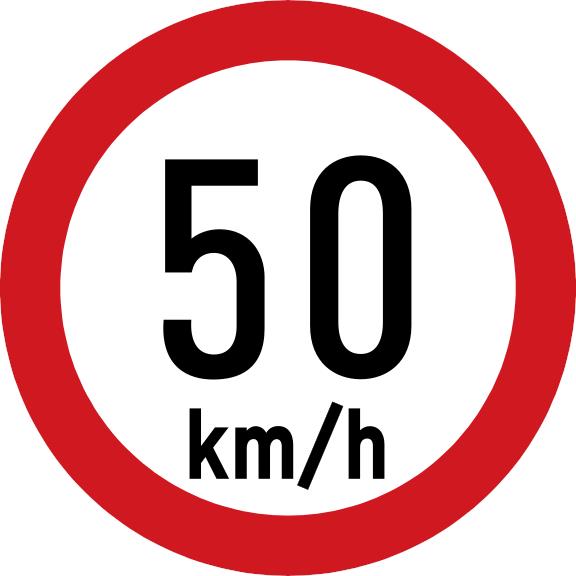 Maximum speed is 50 km/h
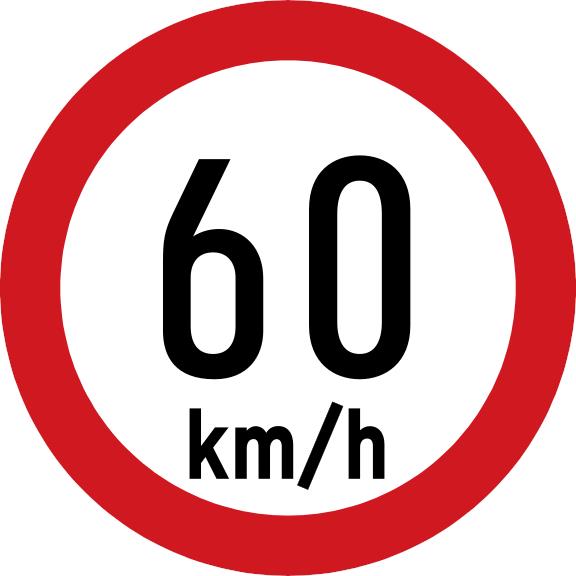 Maximum speed is 60 km/h
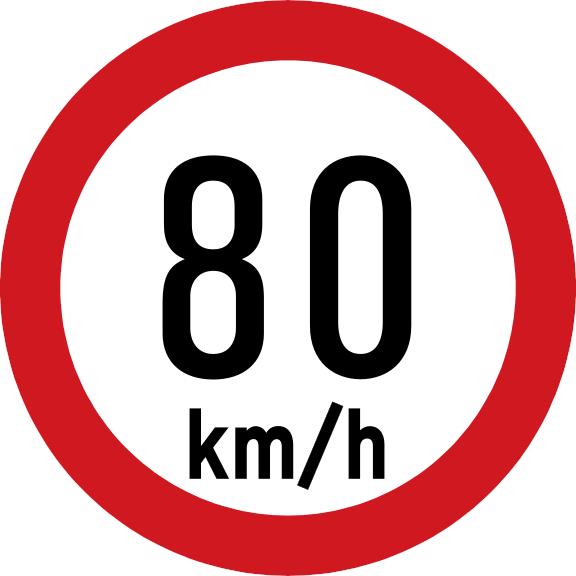 Maximum speed is 80 km/h
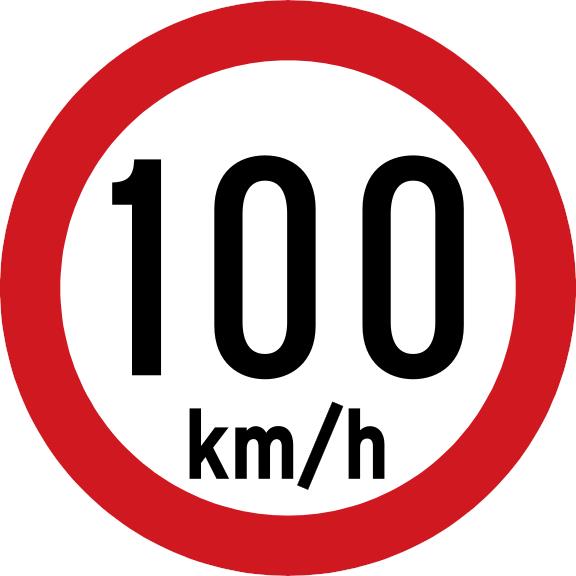 Maximum speed is 100 km/h
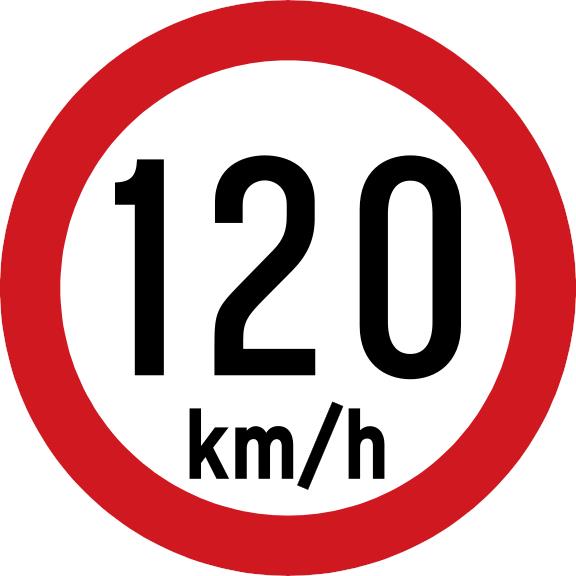 Maximum speed is 120 km/h
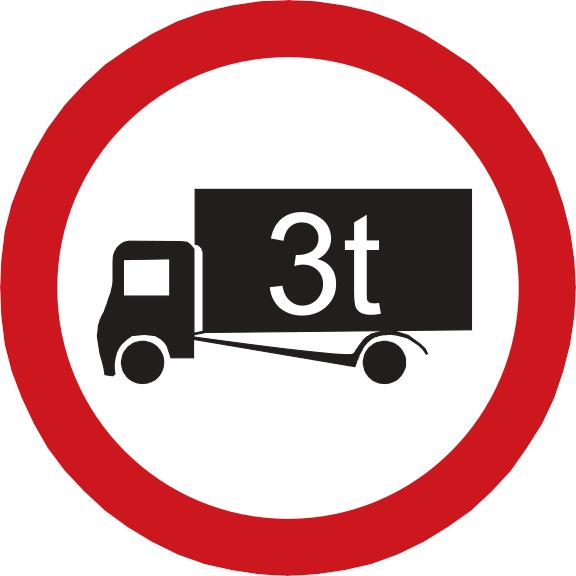 Maximum permitted weight is 3 tonnes
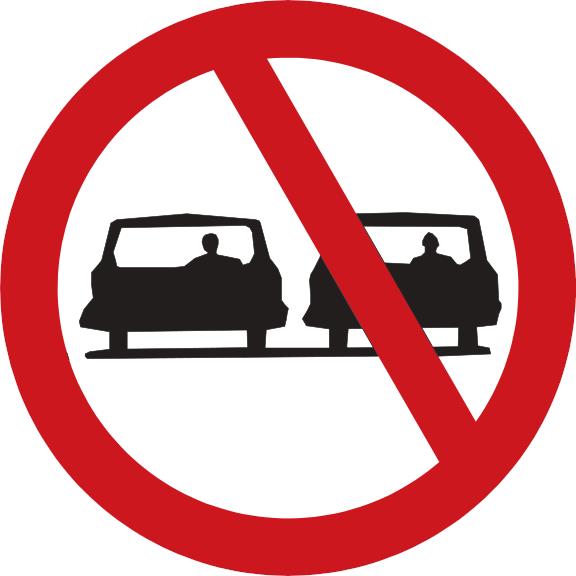 No overtaking
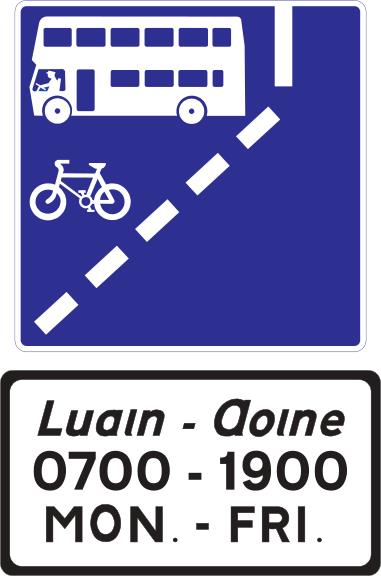 Only buses, cyclists and taxis are allowed to use the lane ahead during the hours indicated
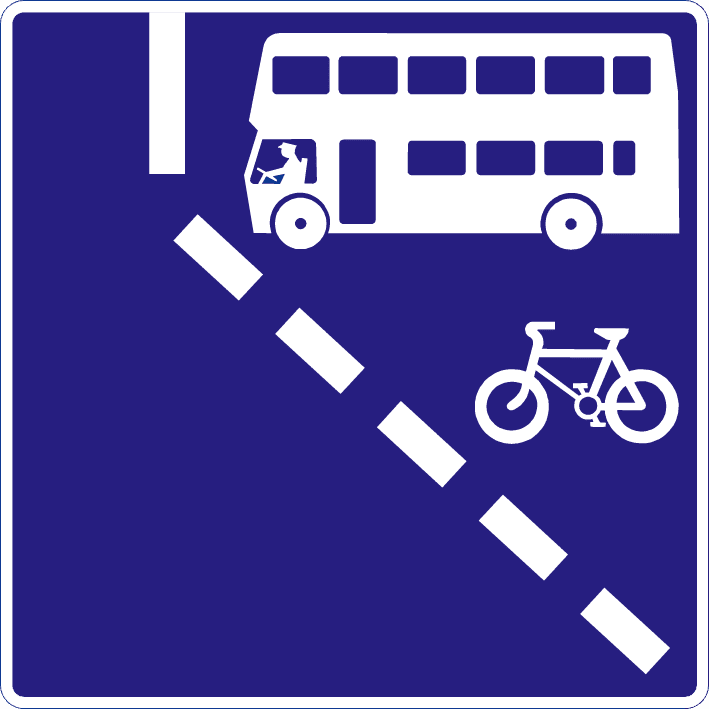 Bus and cycle lane ahead on right
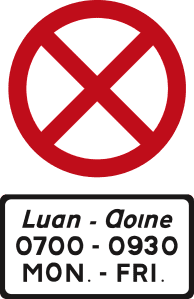 Clearway - no stopping or parking during the times shown
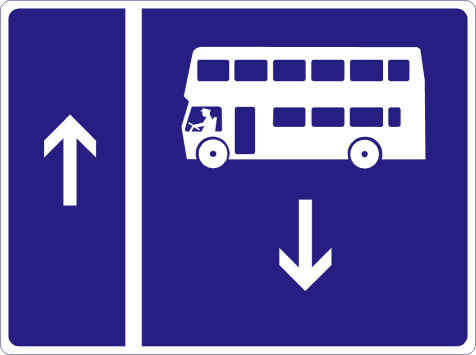 Contra-flow bus lane on the right
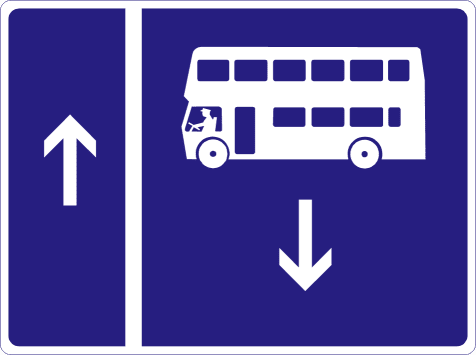 Contra-flow bus lane
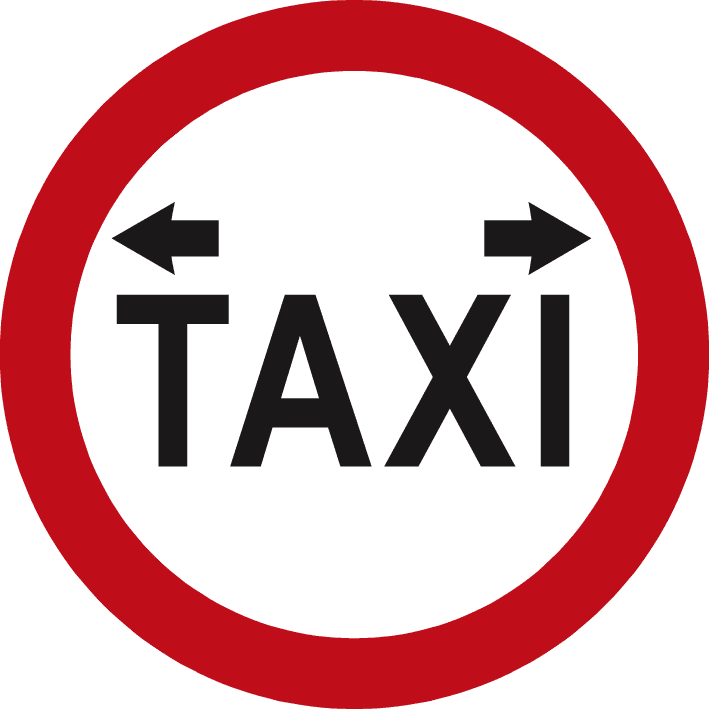 Designated rank for taxis
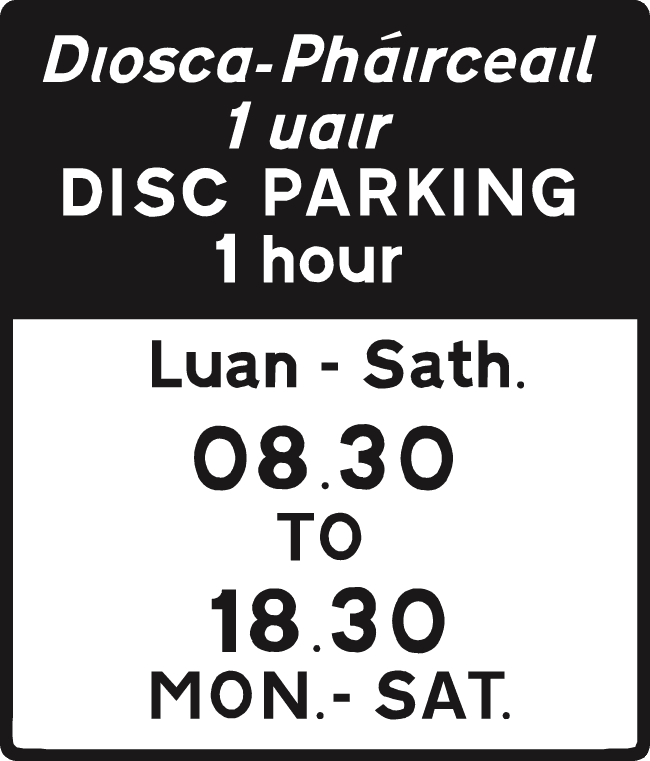 Disc parking operates during the time shown
 Keep left
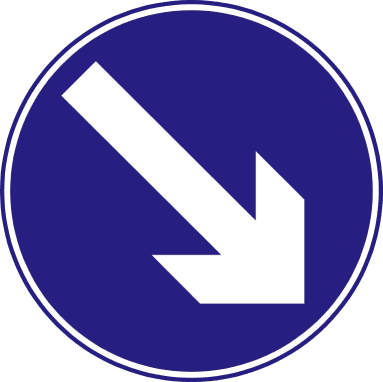 Keep right
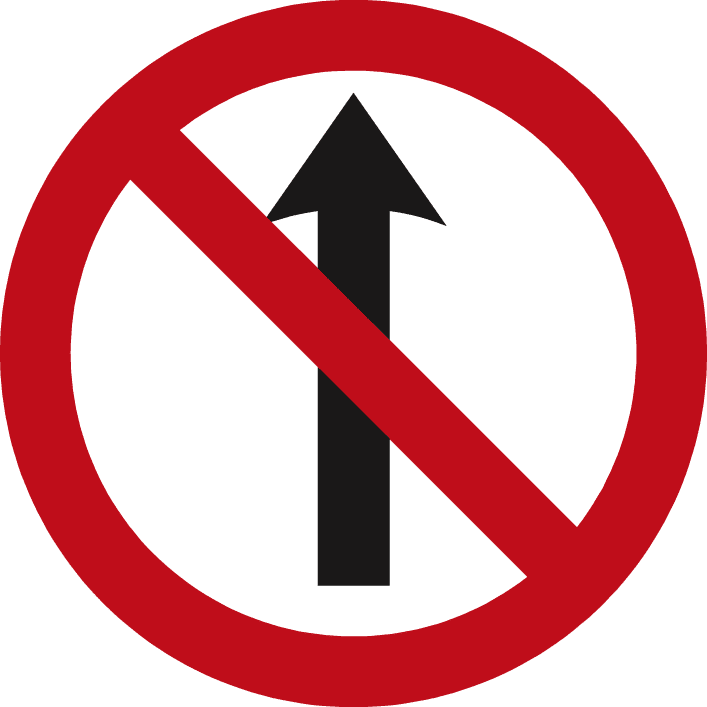 No entry ahead
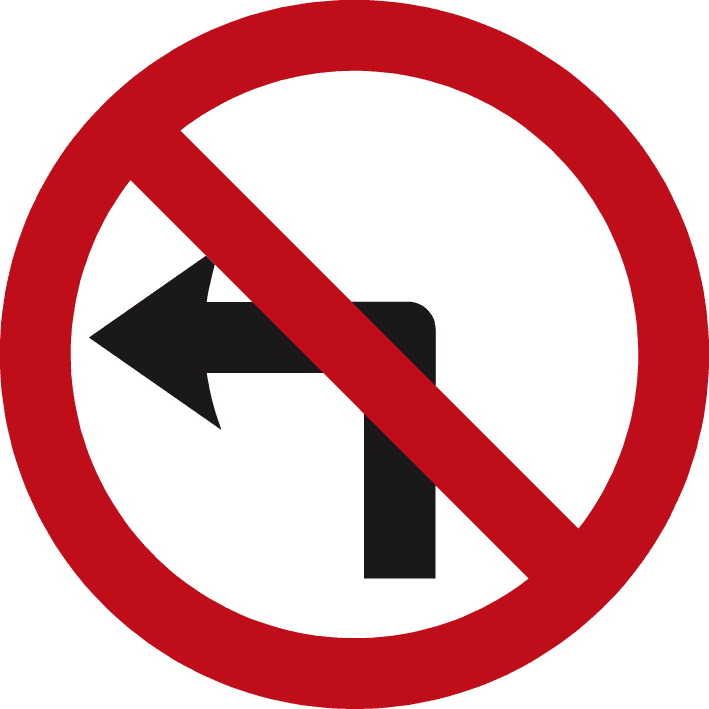 No left turn
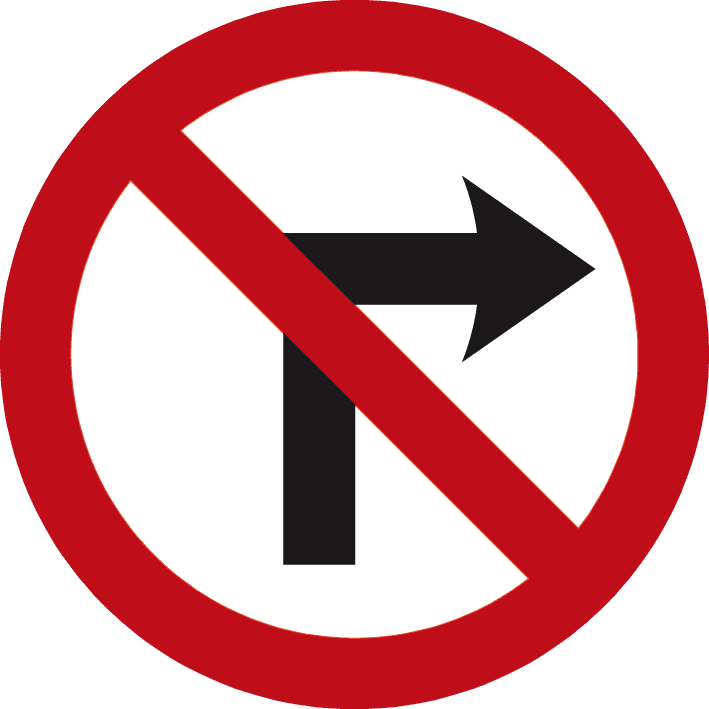 No right turn
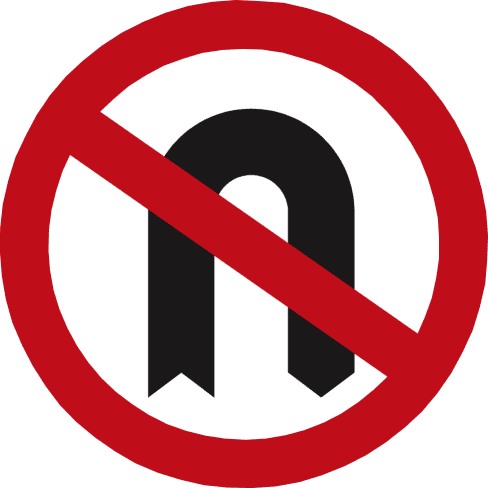 U-turn not permitted
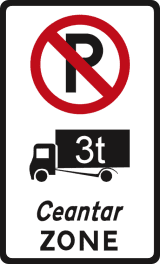 Parking of vehicles exceeding the weight shown is not allowed
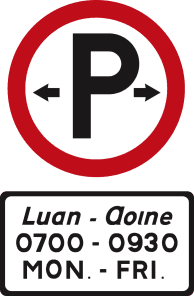 Parking permitted during the times shown
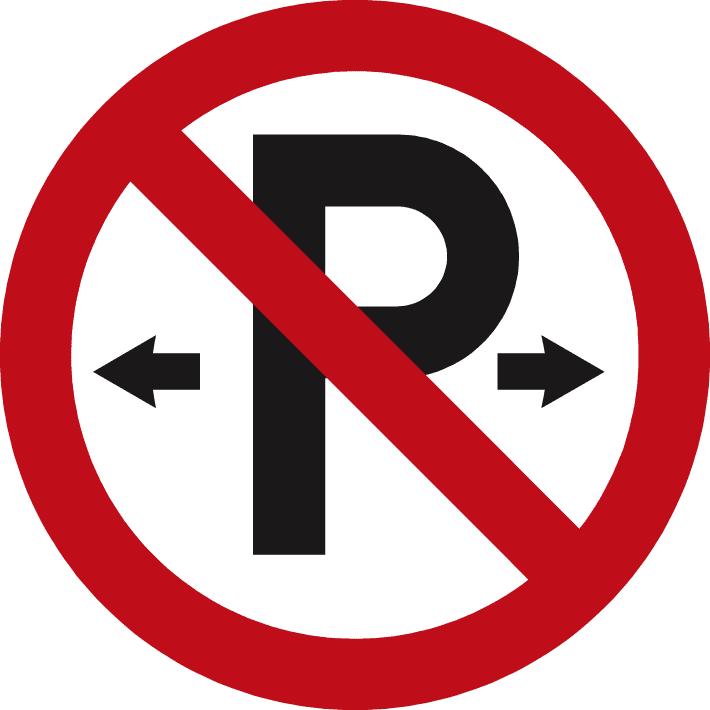 Parking is not allowed
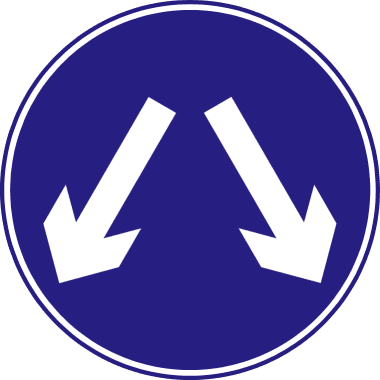 Pass either side
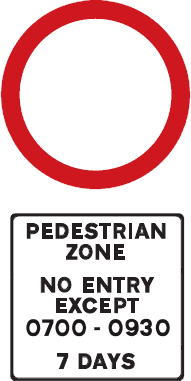 Pedestrianised street ahead - traffic not allowed except during times shown
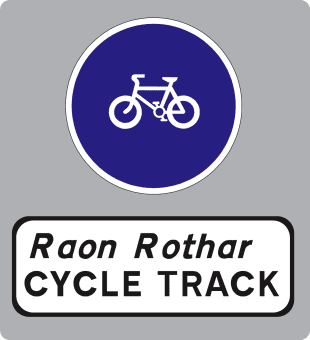 Start of cycle track
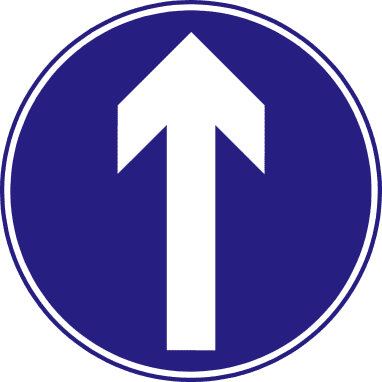 Straight ahead only
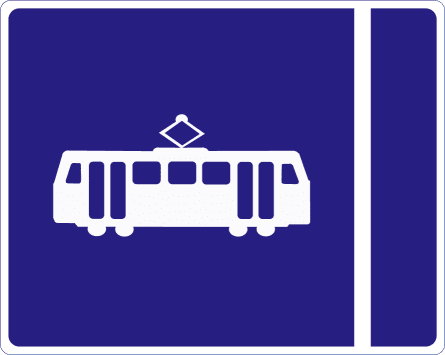 Tram lane on left
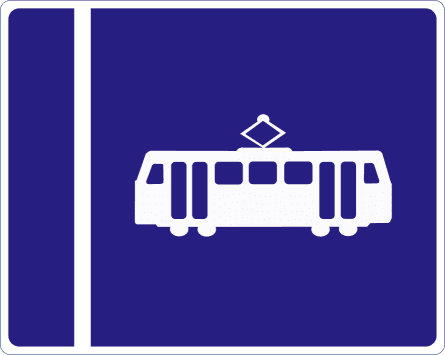 Tram lane on right
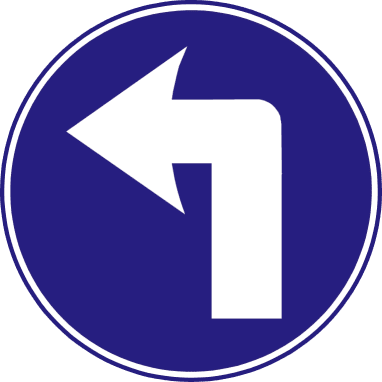 Turn left ahead
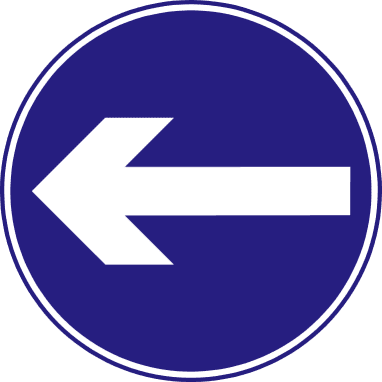 Turn left only
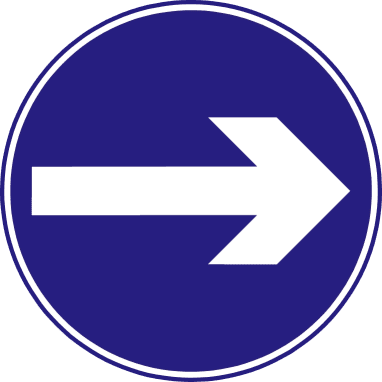 Turn right only
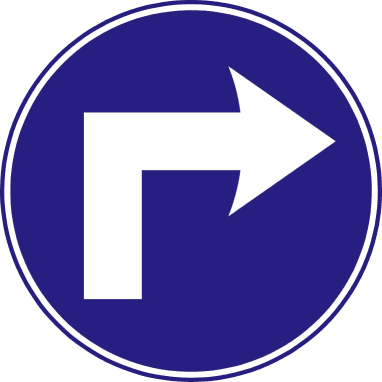 You must turn right ahead
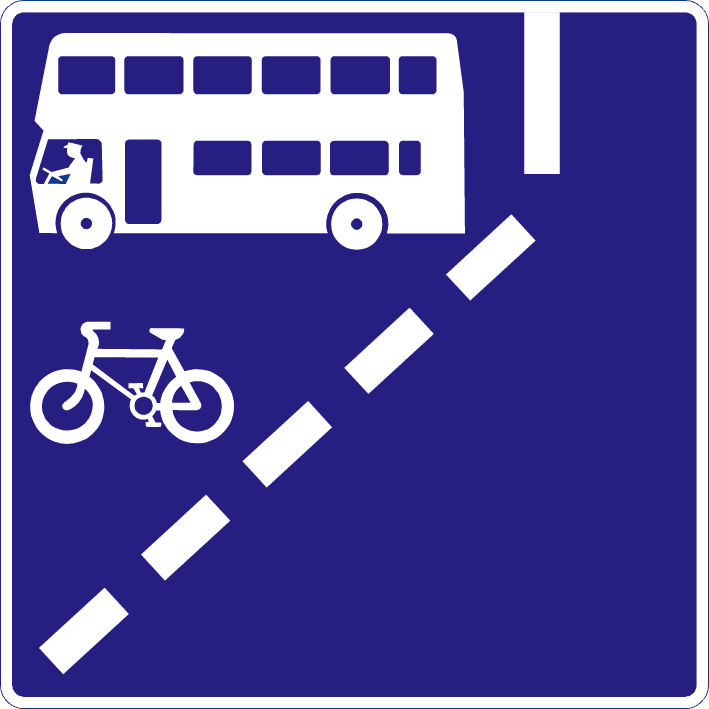 With-flow bus and cycle lane ahead on left
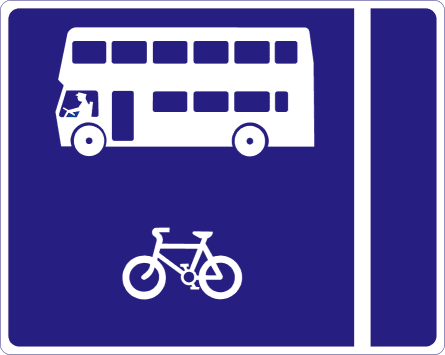 With-flow bus and cycle lane on left
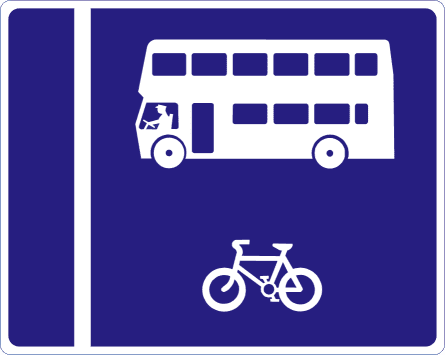 With-flow bus lane on the right
Warning signs
Black symbols on a yellow diamond warn of junctions, bends, hills, crossings and other hazards ahead.
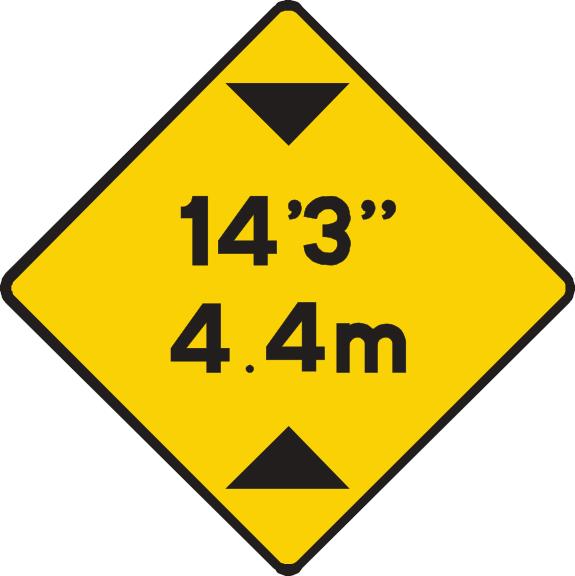 Low bridge up ahead
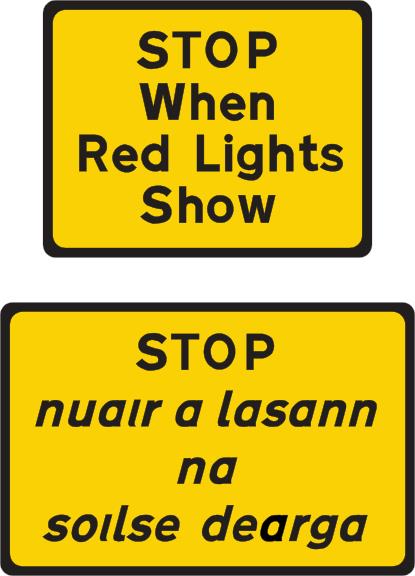 The driver must stop when red lights show
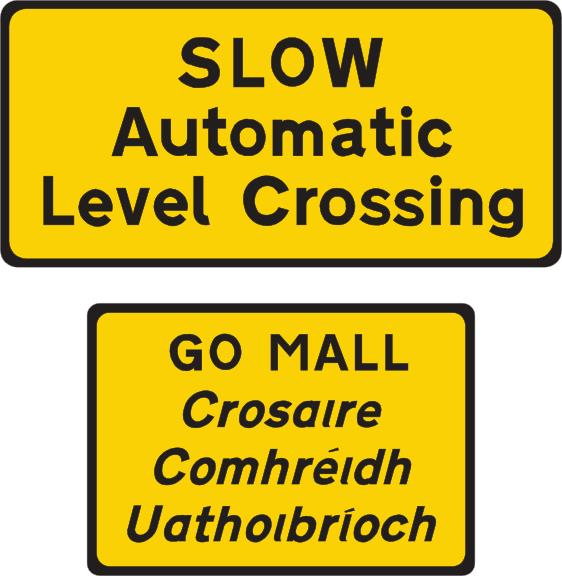 Automatic level crossing ahead
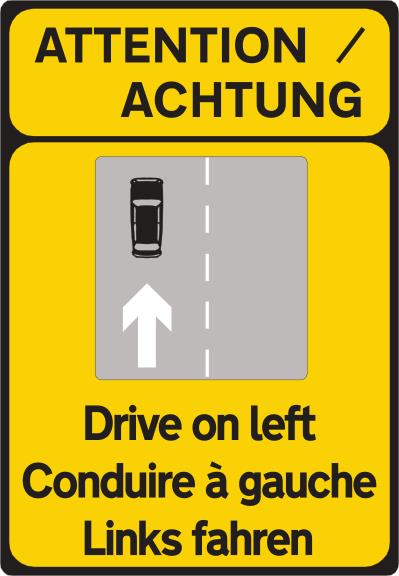 A driver must drive on the left-hand side
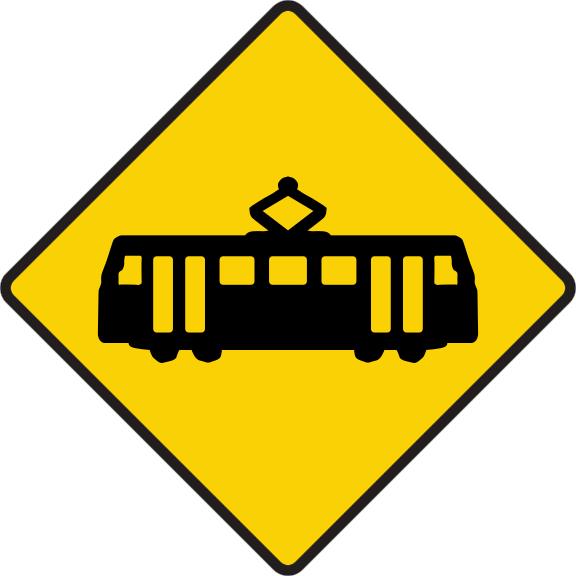 Tramway crossing ahead
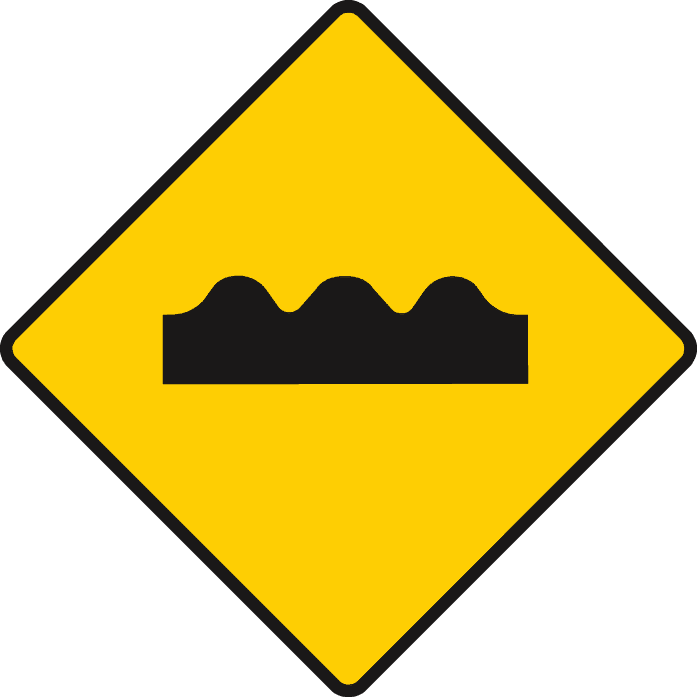 Series of bumps or hollows ahead
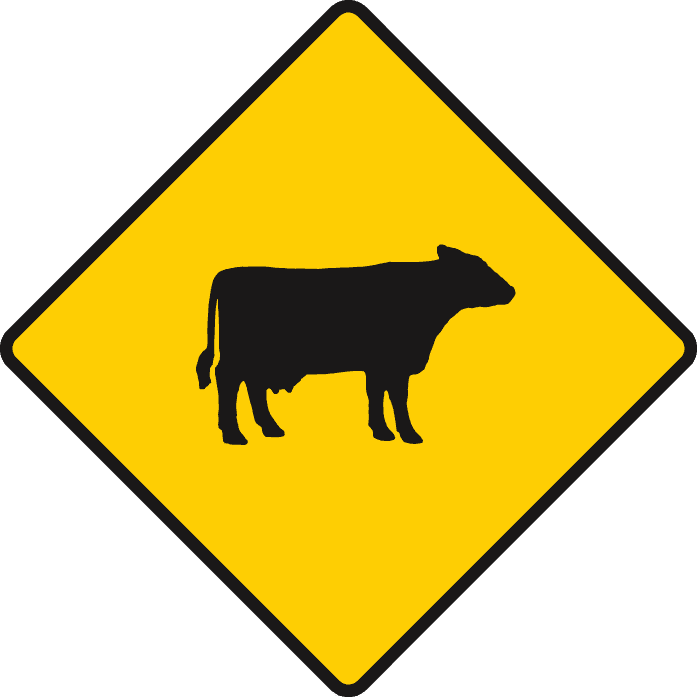 Possibility of cattle or farm animals ahead
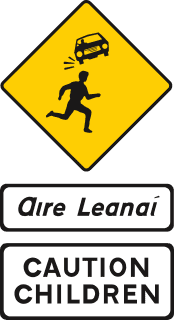 Beware of children crossing
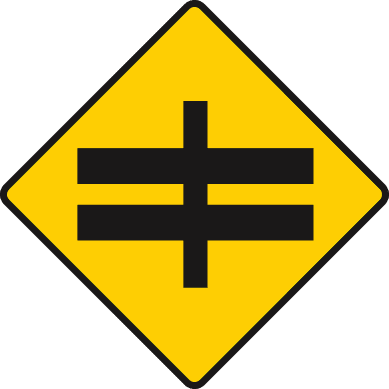 Crossroads with dual carriageway ahead
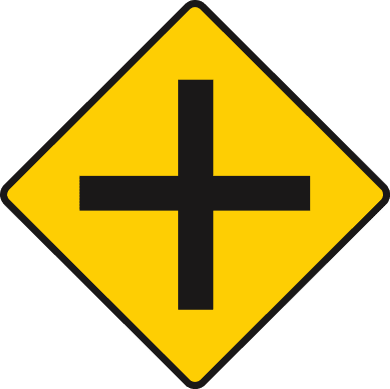 Crossroads ahead with roads of equal importance
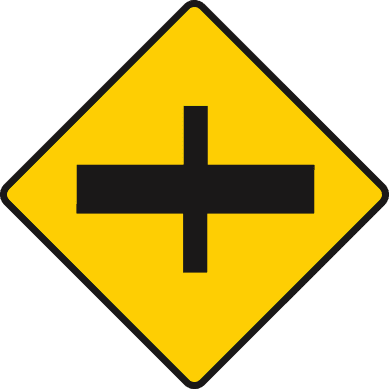 Crossroads with major road ahead
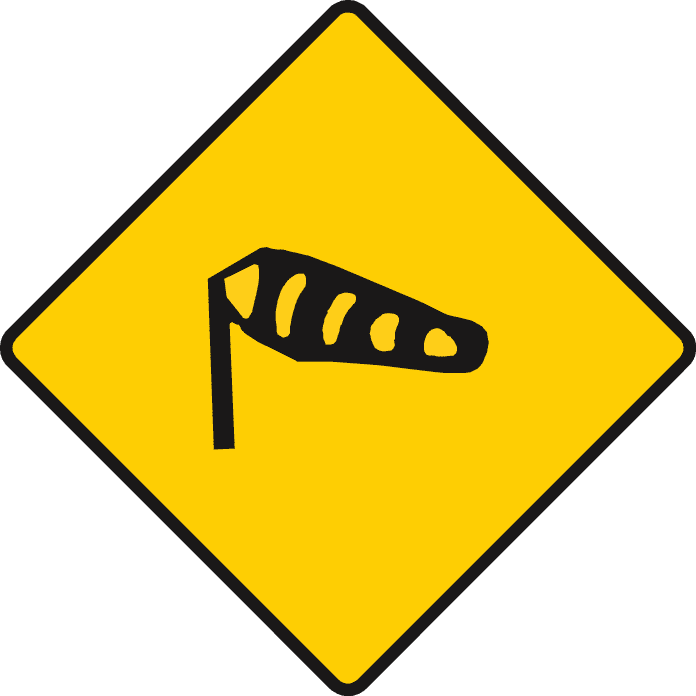 Crosswinds ahead
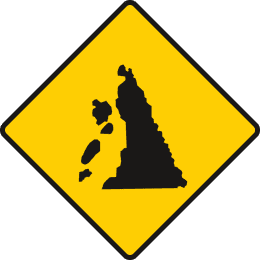 Danger of falling rocks ahead
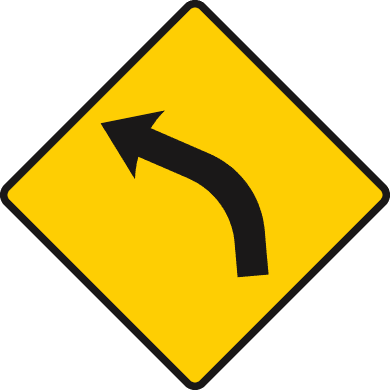 Dangerous bend ahead
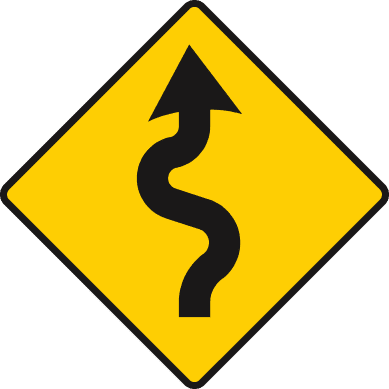 Series of dangerous bends ahead
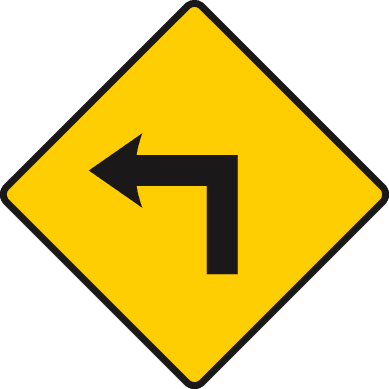 Dangerous corner ahead
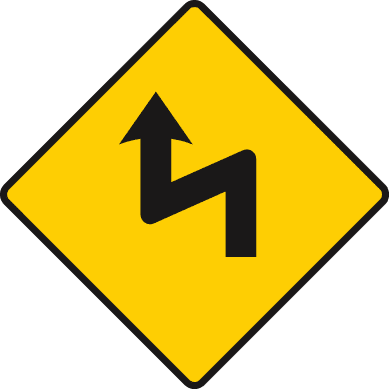 Series of dangerous corners ahead
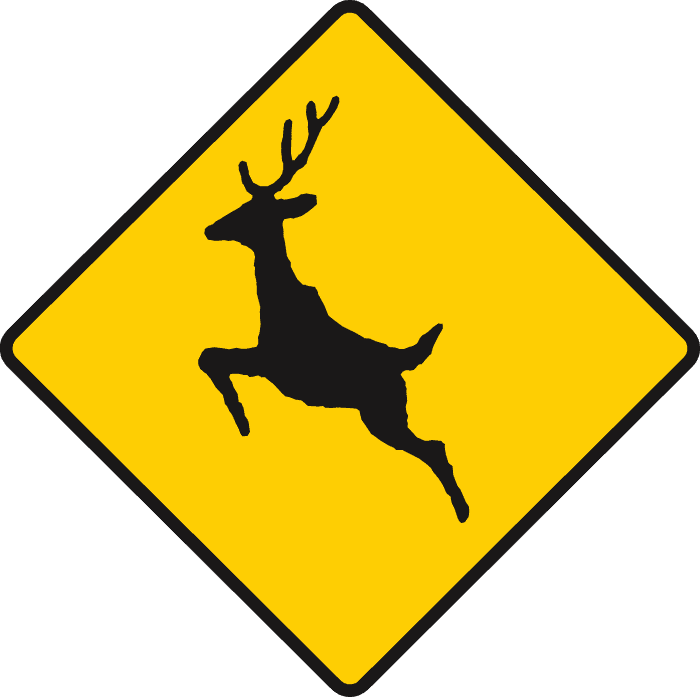 Deer or wild animals ahead
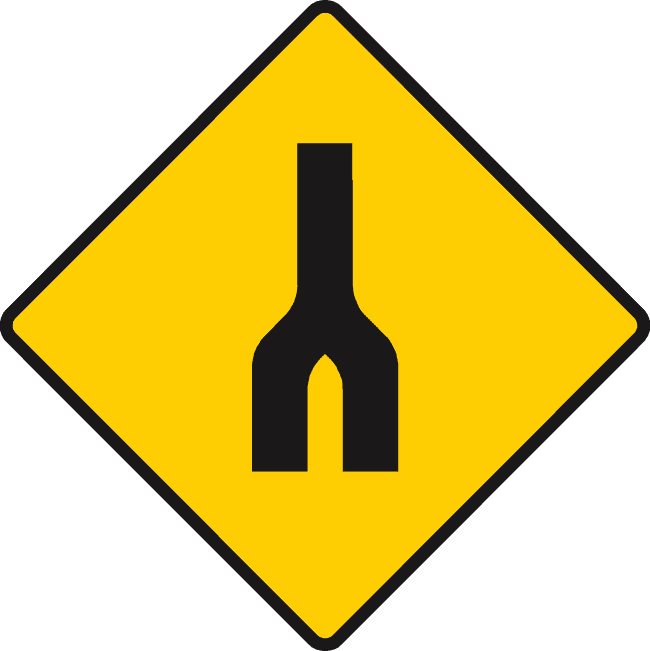 Dual carriageway ends
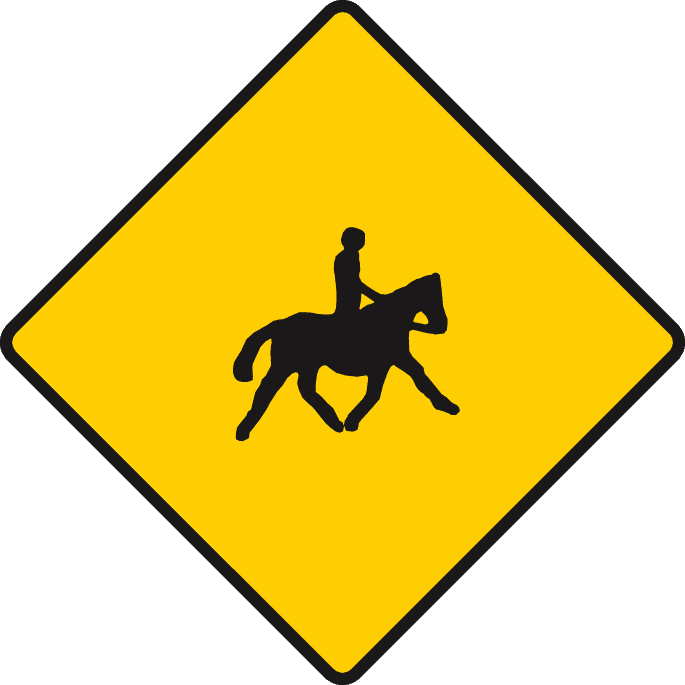 Accompanied horses and ponies ahead
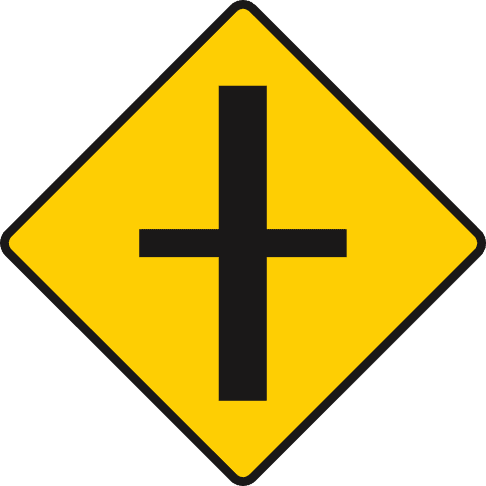 Junction ahead with roads of lesser importance
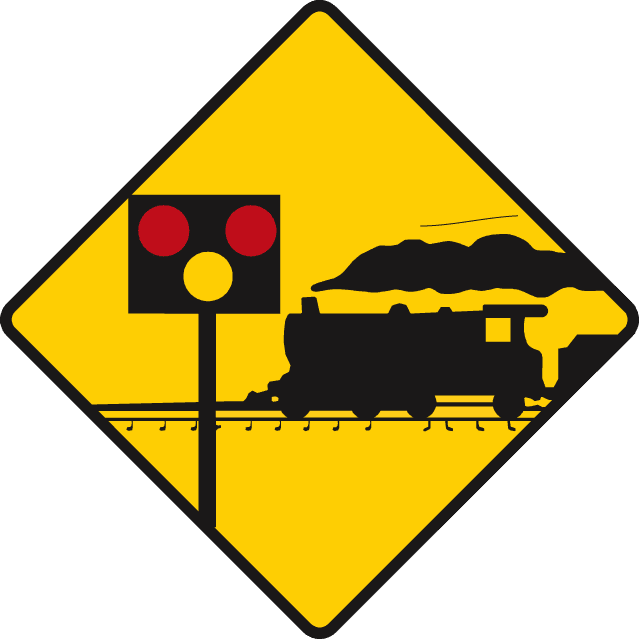 Level crossing ahead protected by lights and barriers
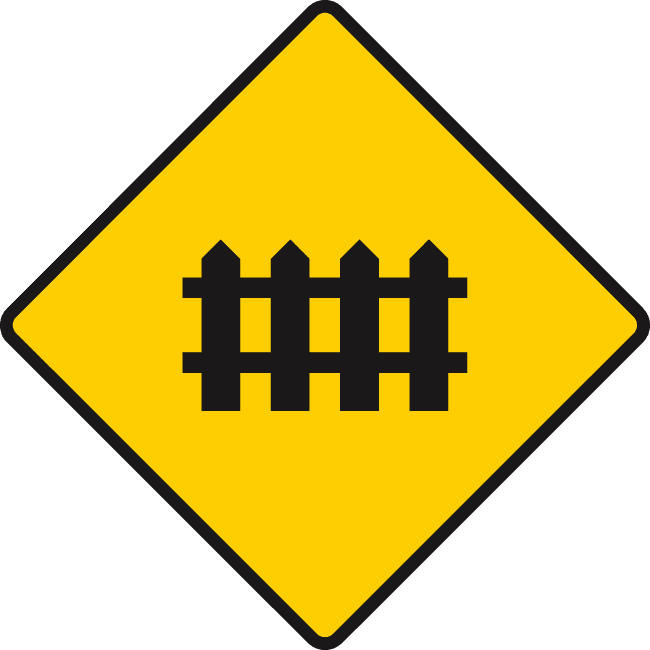 Level crossing ahead guarded by gates or barriers
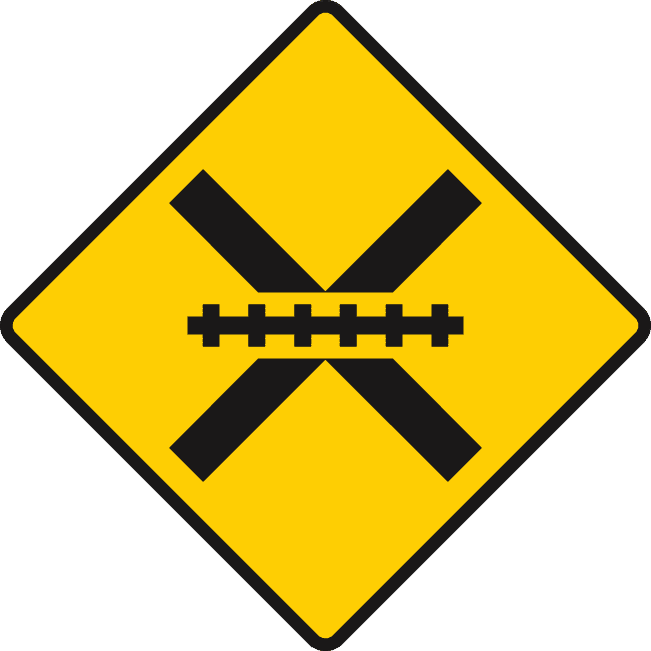 Level crossing ahead unguarded by gates or barriers
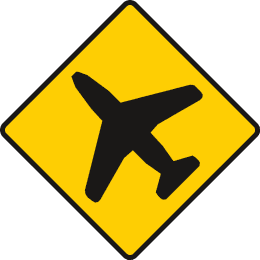 Possibility of low flying aircraft
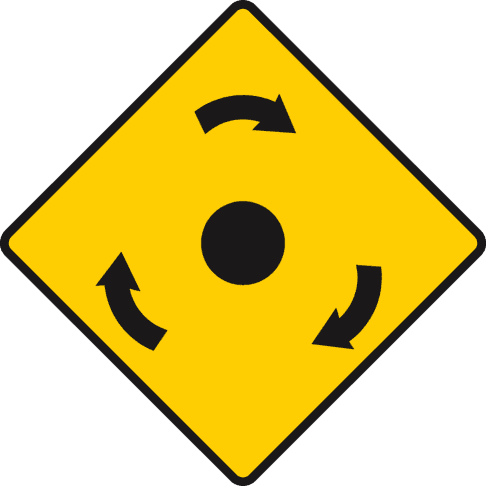 Mini-roundabout ahead
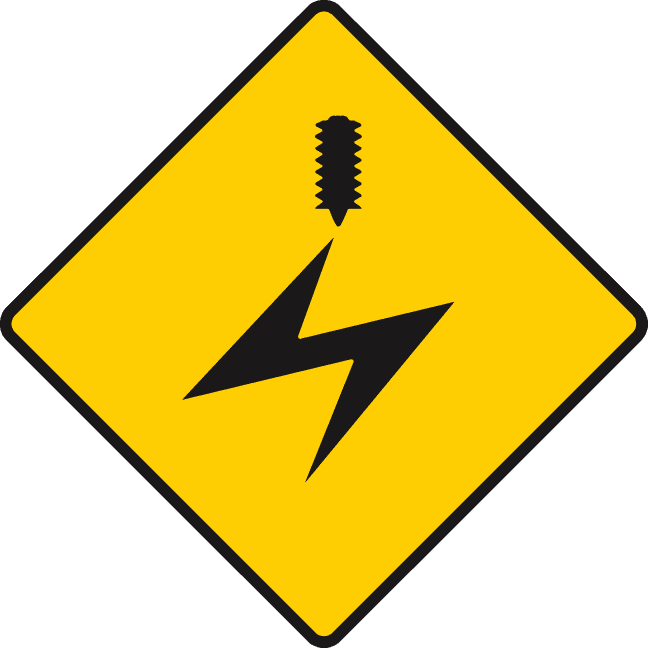 Overhead electric cables
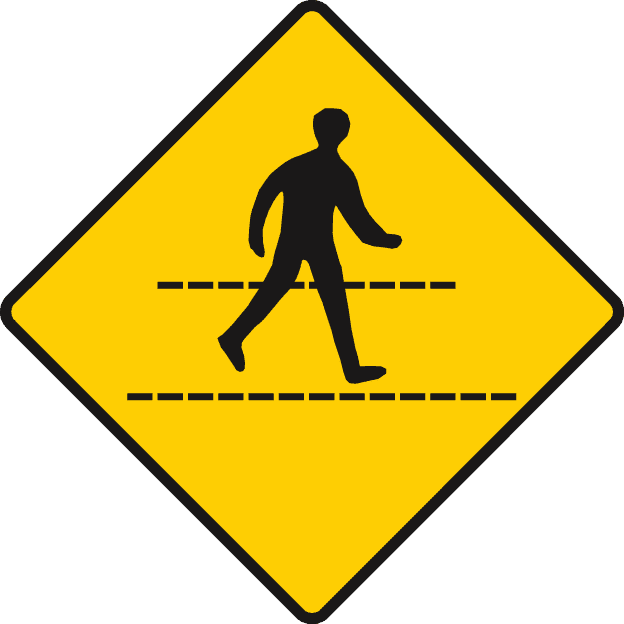 Pedestrian crossing ahead
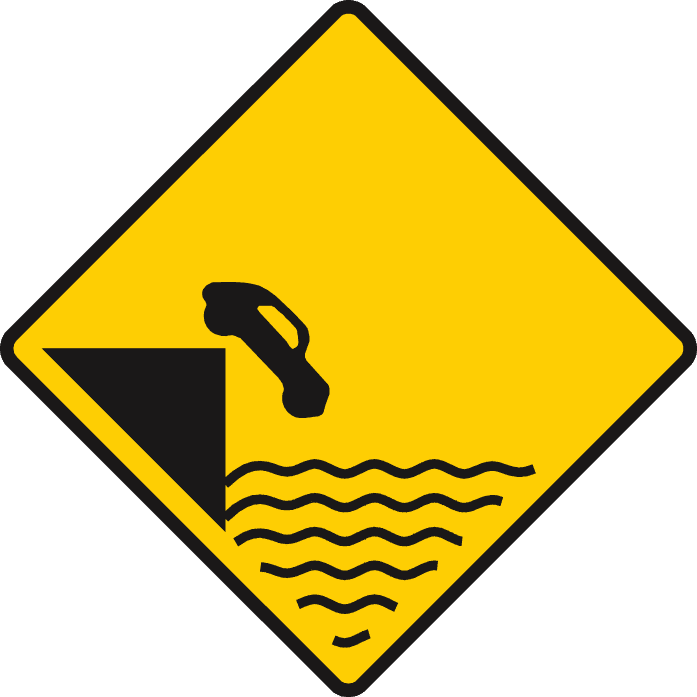 Unprotected quay, canal or river ahead
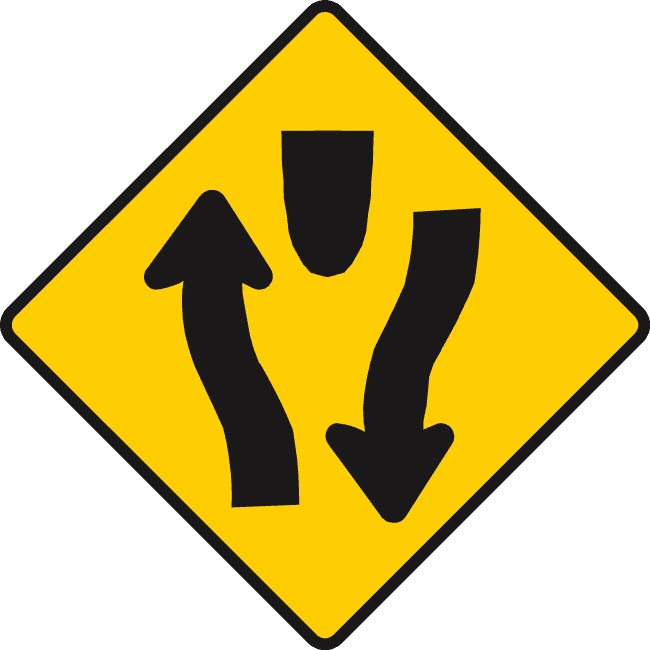 Road divides ahead
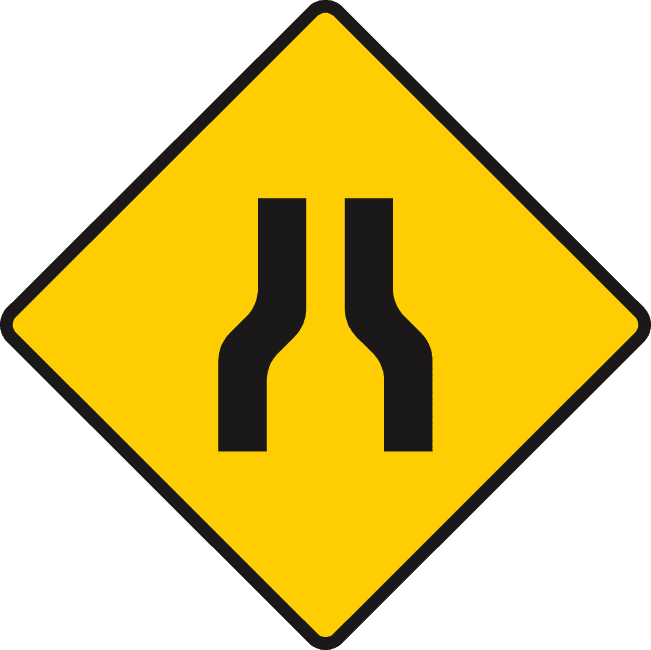 Road narrows on both sides
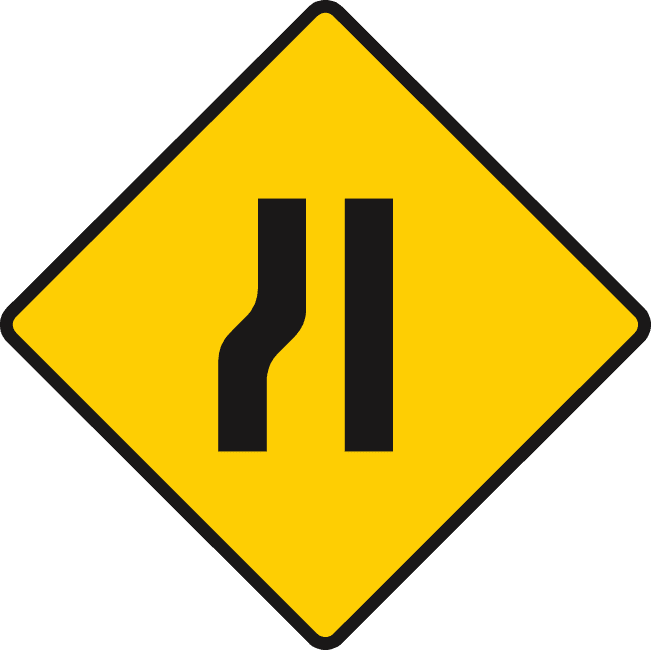 Road narrows on the left
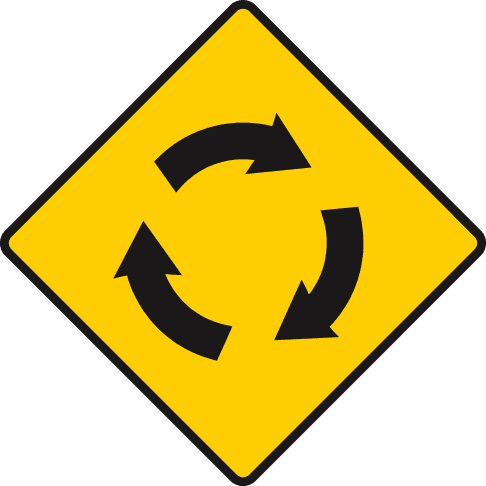 Roundabout ahead
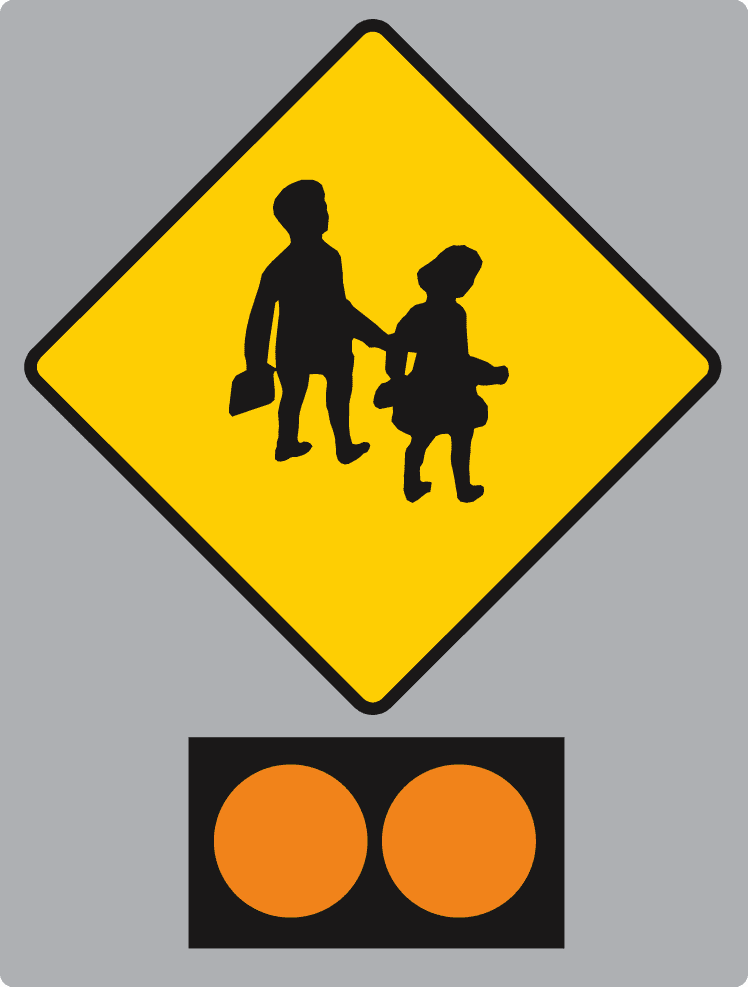 School children crossing ahead
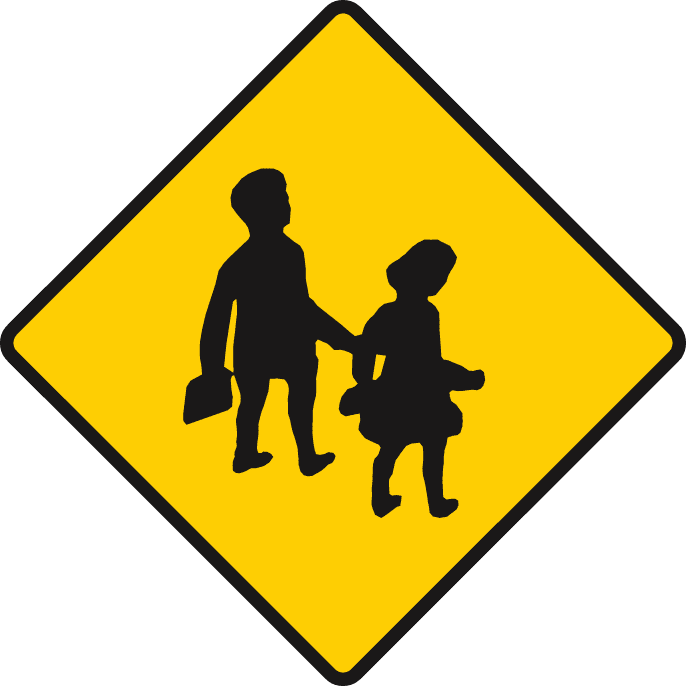 School ahead
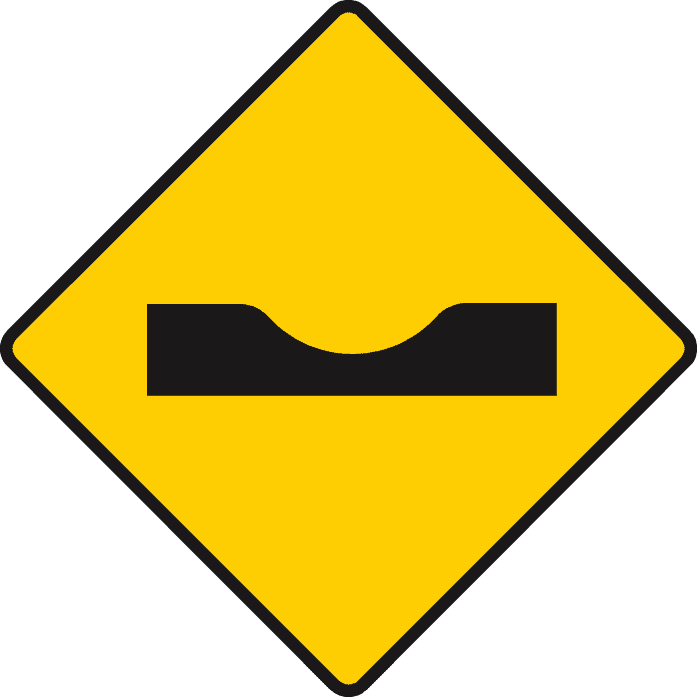 Sharp depression or dip ahead
 Sharp change of direction to the right
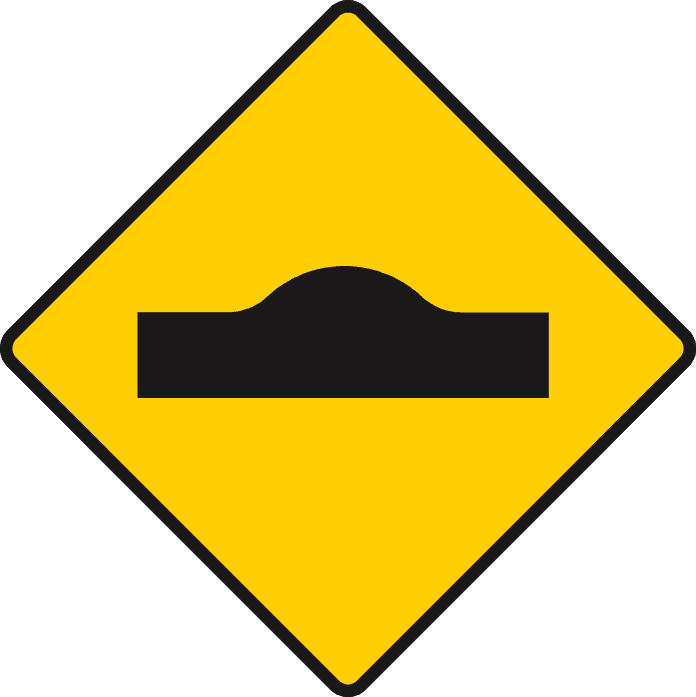 Sharp rise in the road ahead - for example, a humpback bridge
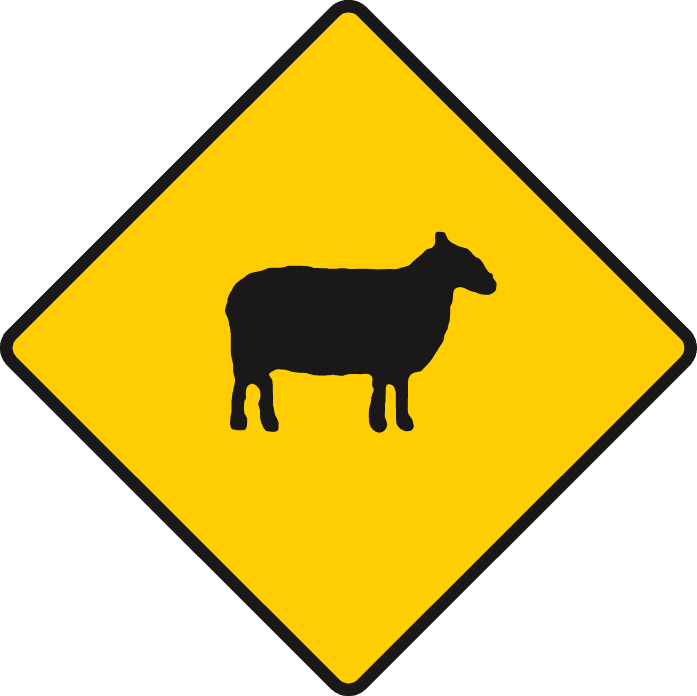 Possibility of sheep ahead
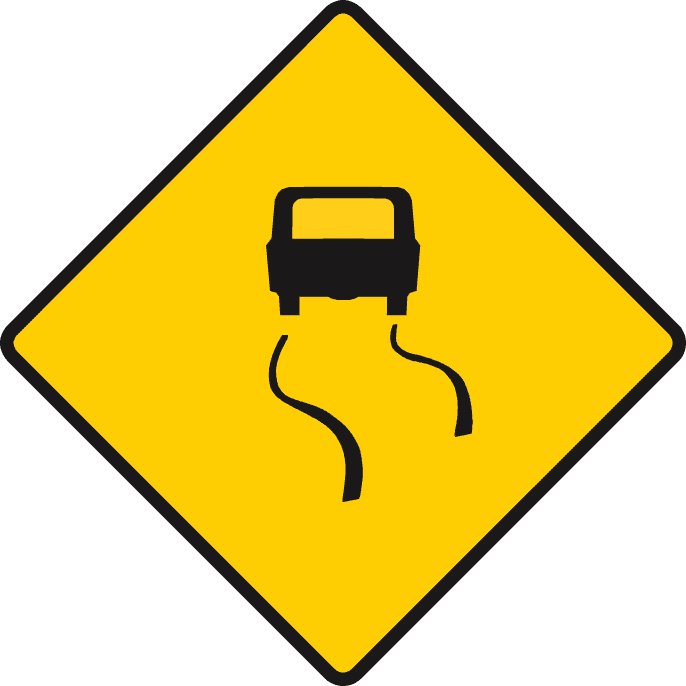 Slippery road ahead
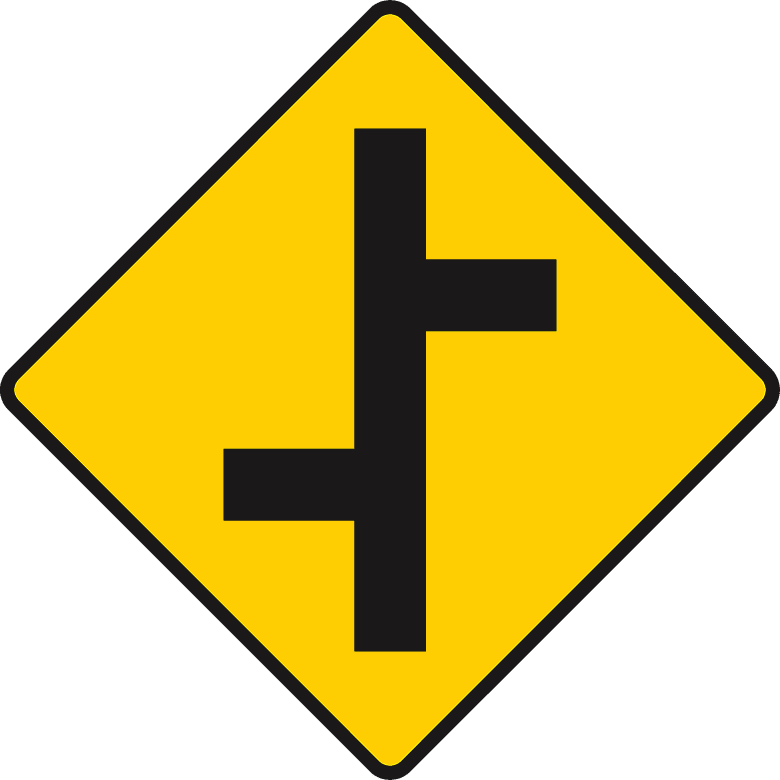 Staggered crossroads ahead with roads of equal importance
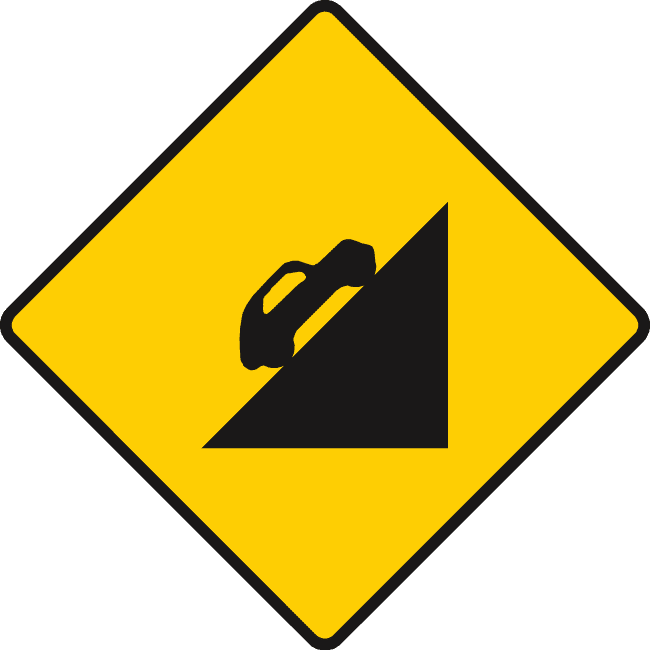 Steep ascent ahead
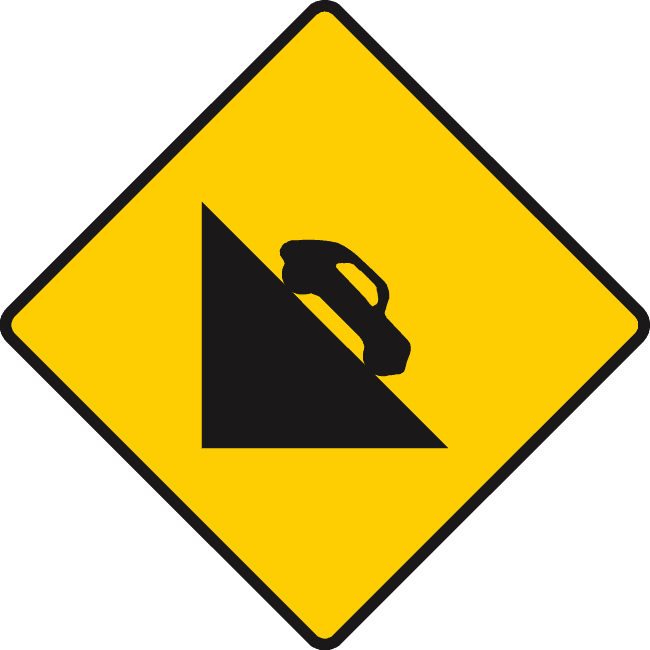 Steep descent ahead
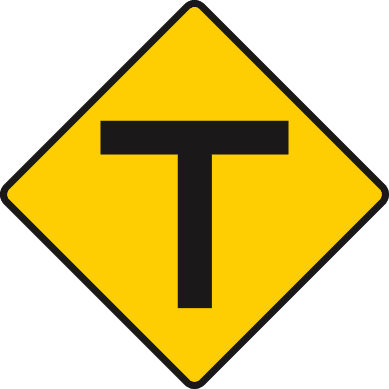 T-junction ahead with roads of equal importance
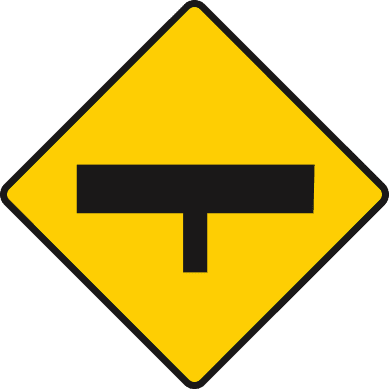 T-junction ahead with a road of major importance
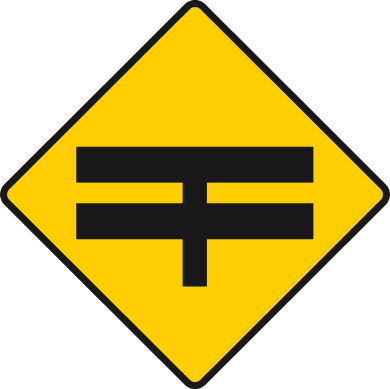 T-junction with dual carriageway ahead
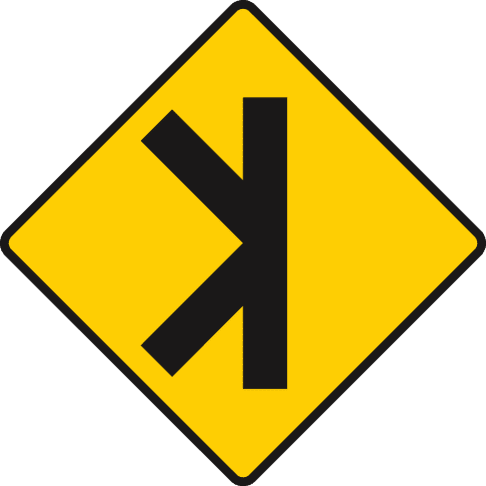 Traffic merging/diverging ahead
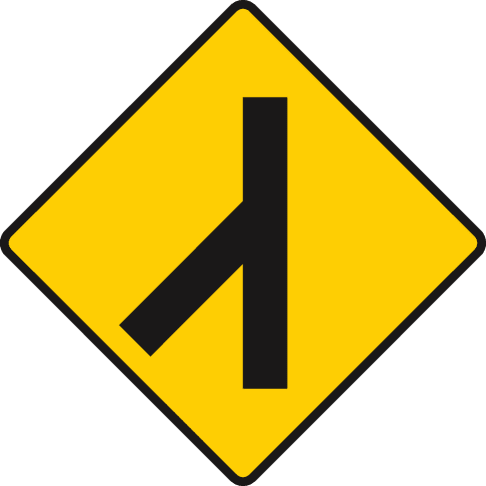 Traffic merging from the left
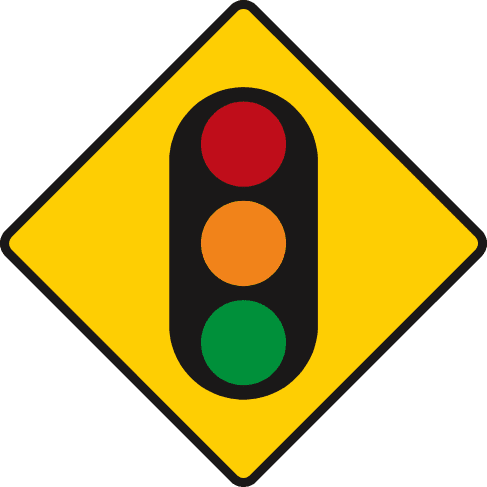 Traffic signals ahead
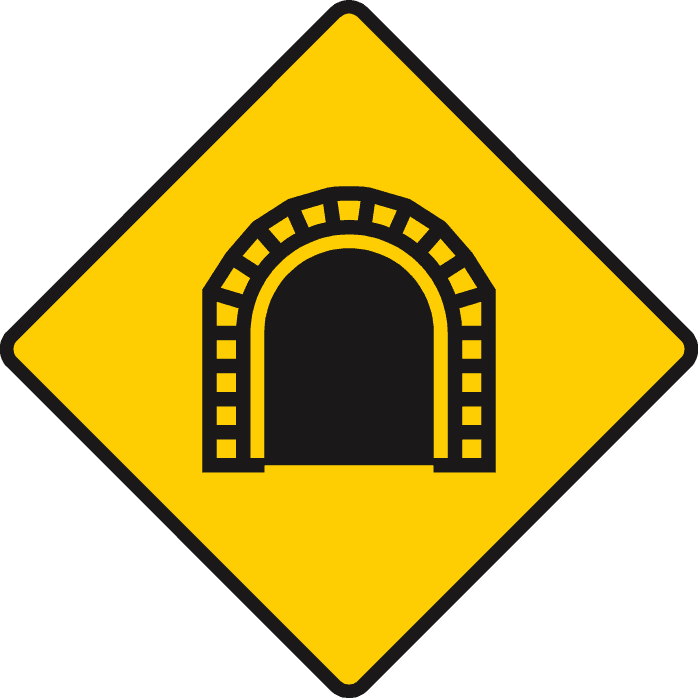 Tunnel ahead
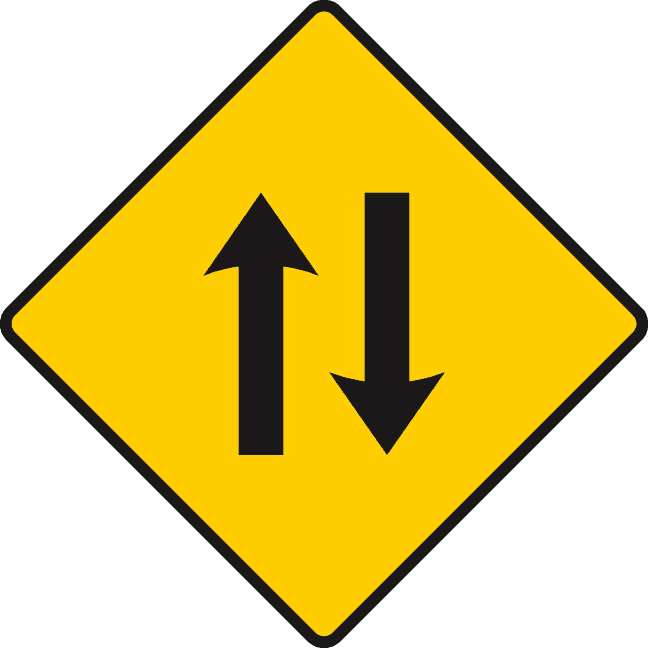 Two-way traffic ahead
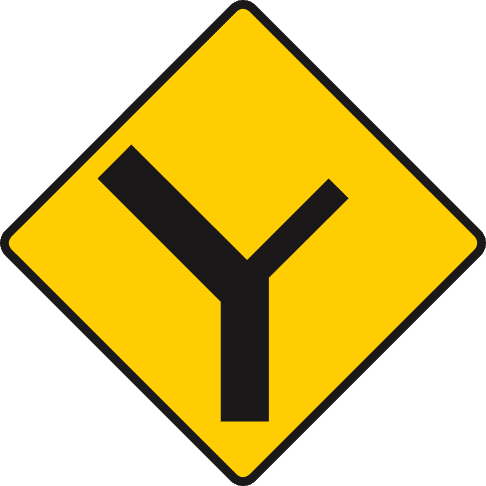 Y-Junction where main road bears to the left
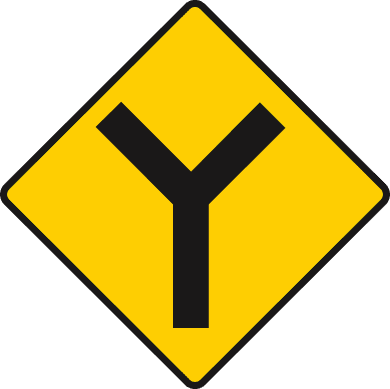 Y-junction ahead with roads of equal importance
Roadworks signs
Temporary signs at roadworks, mostly black on orange, for lane closures, detours and changed road surfaces.
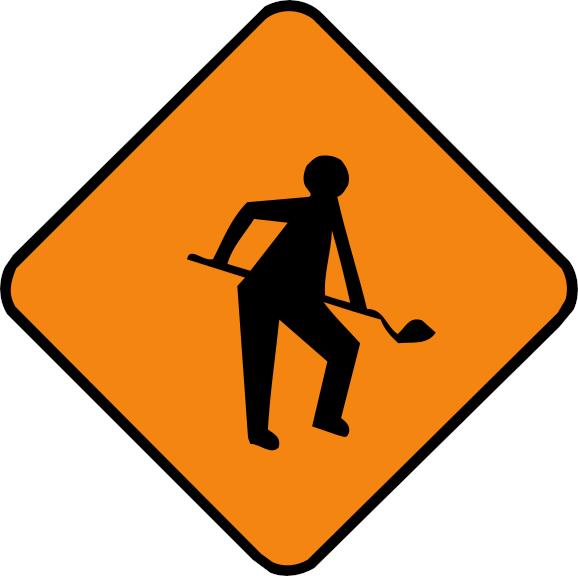 Roadworks ahead
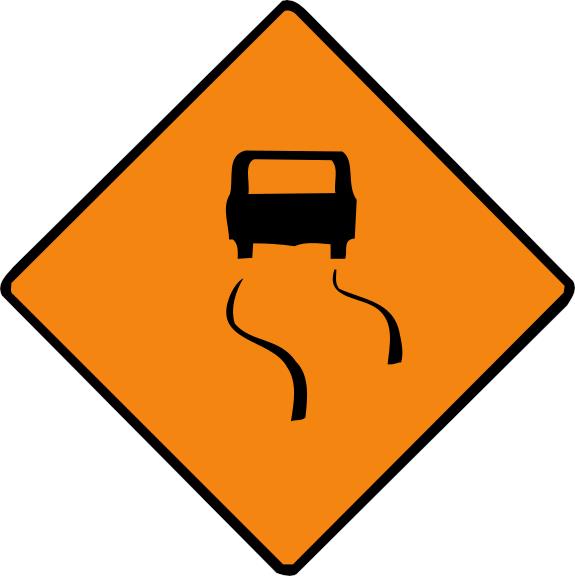 Slippery road
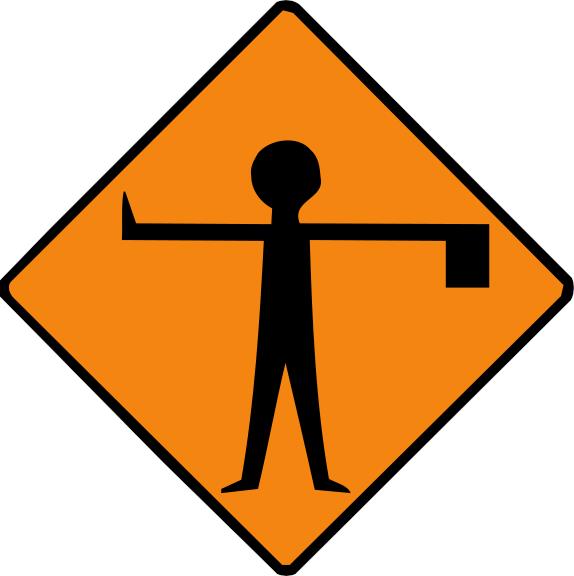 Flagman ahead
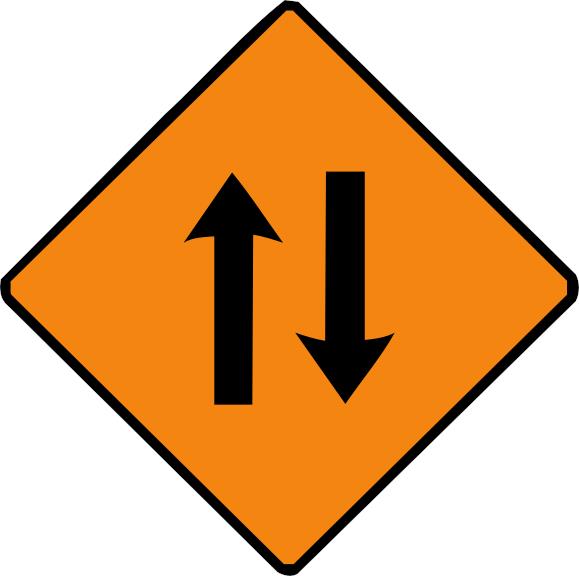 Two-way traffic
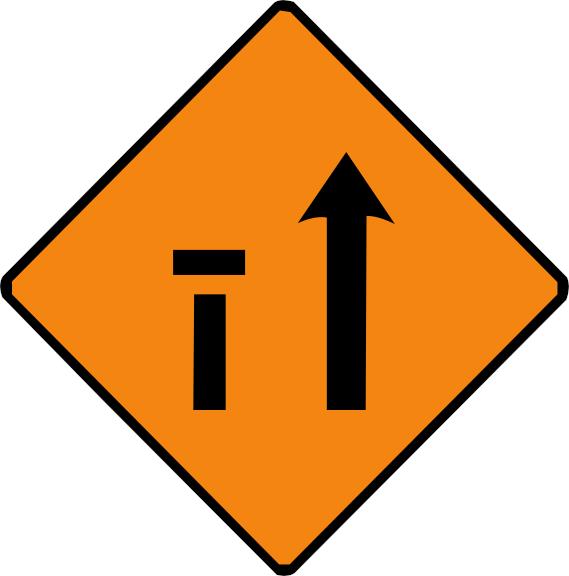 Nearside lane of two closed
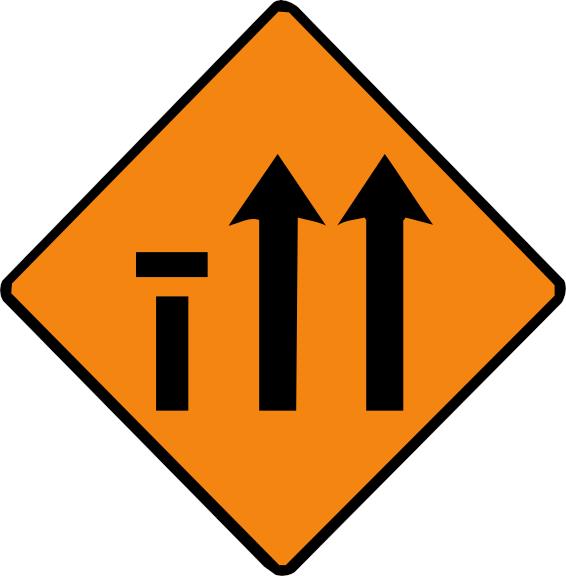 Nearside lane of three closed
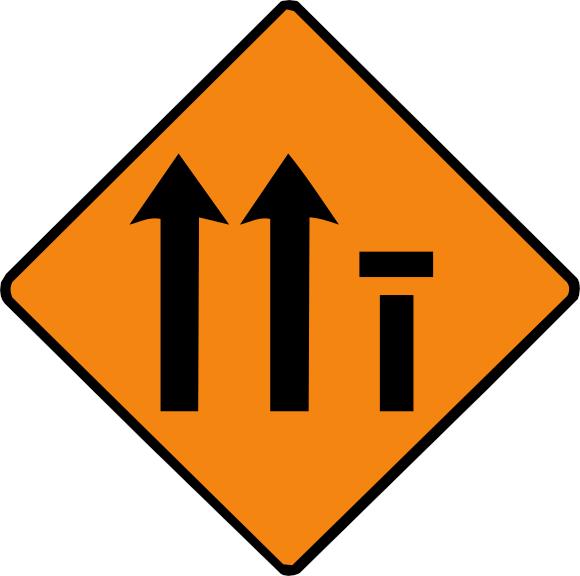 Offside lane closed ahead
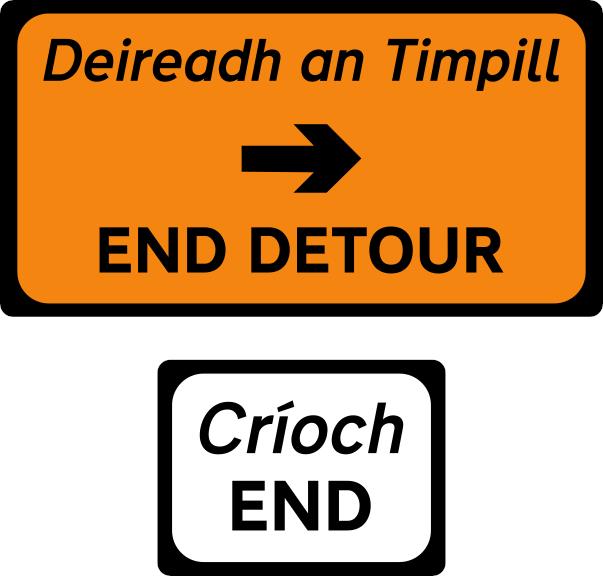 End of detour
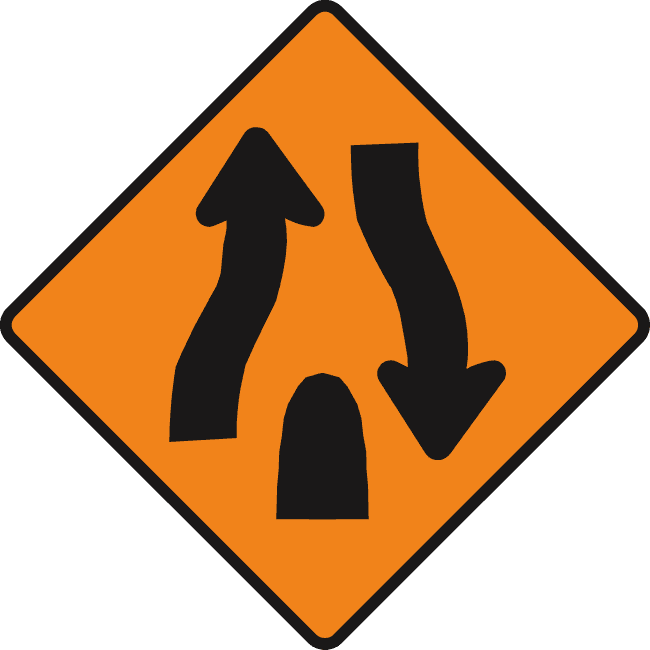 End of central reserve or obstruction
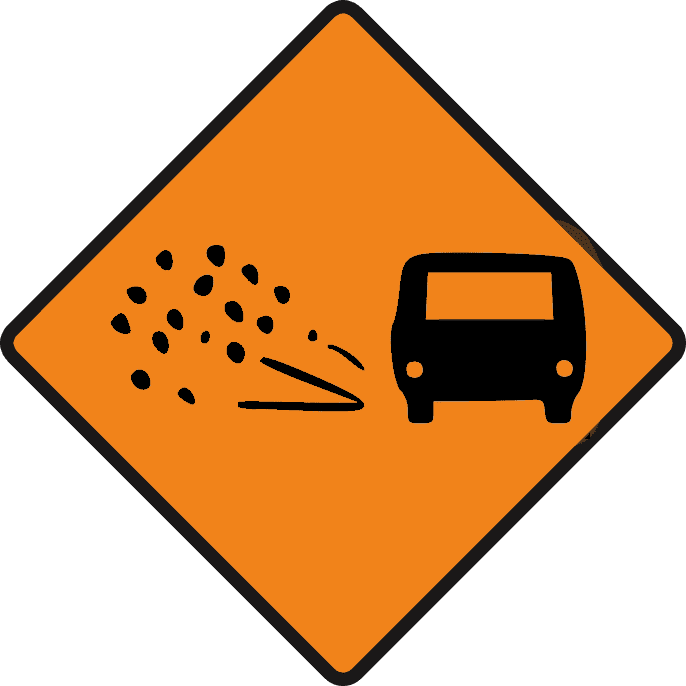 Loose chippings on road
 Proceed with caution
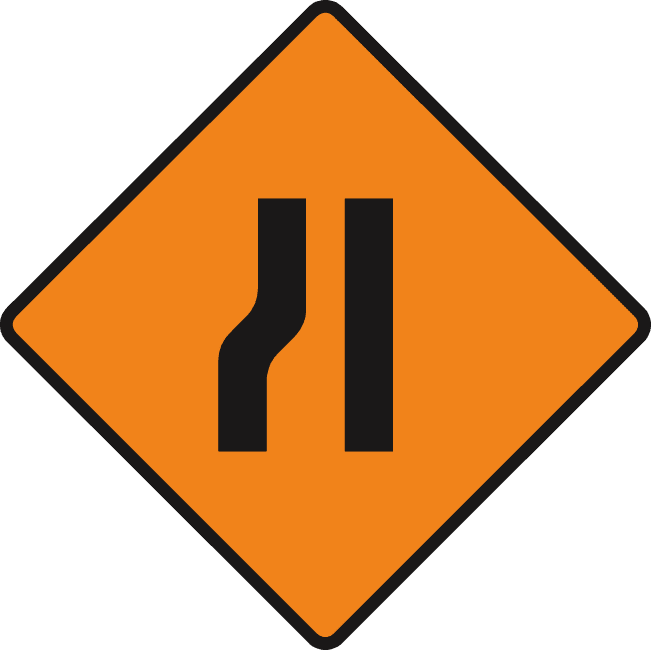 Road narrows from left
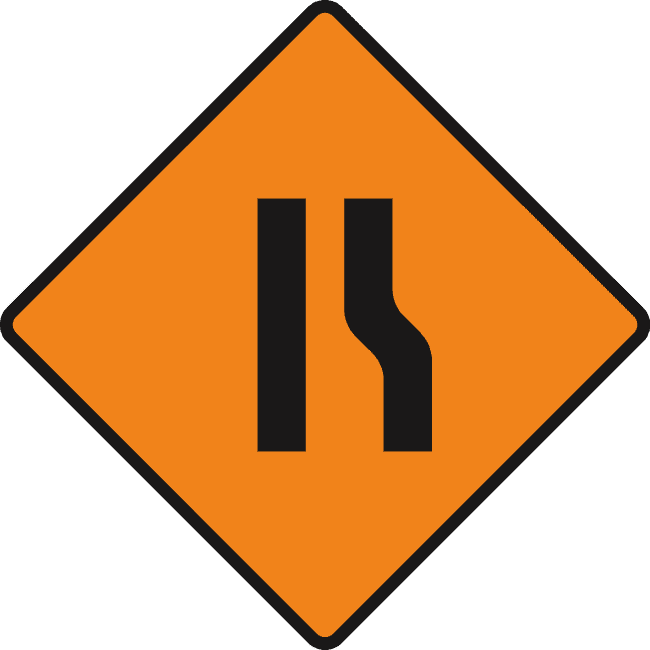 Road narrows from right
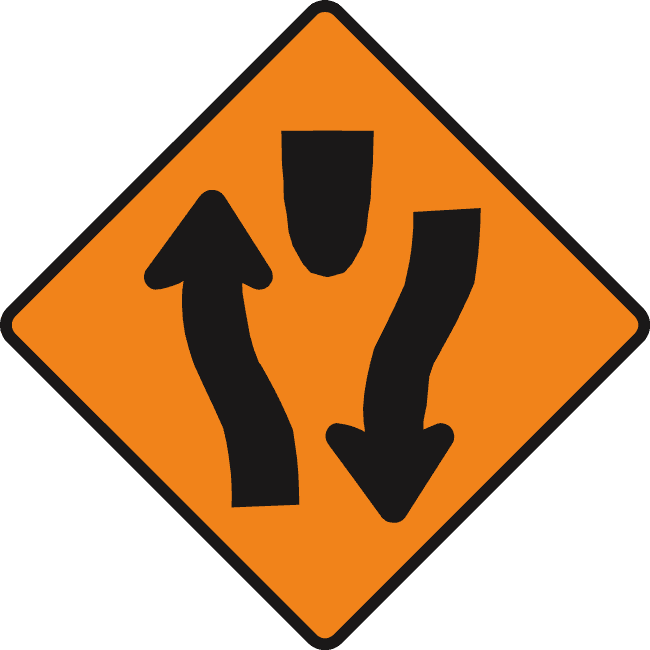 Start of central reserve or obstruction
 Stop before or at the sign
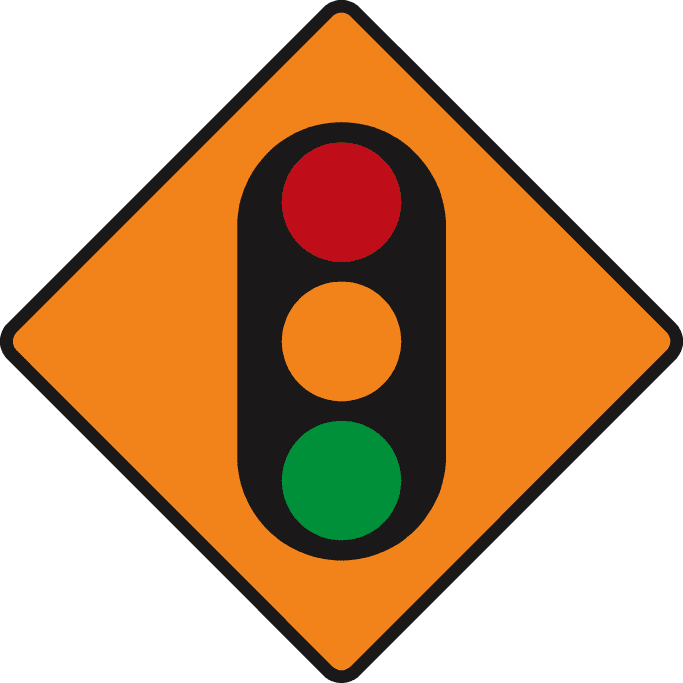 Temporary traffic signals ahead
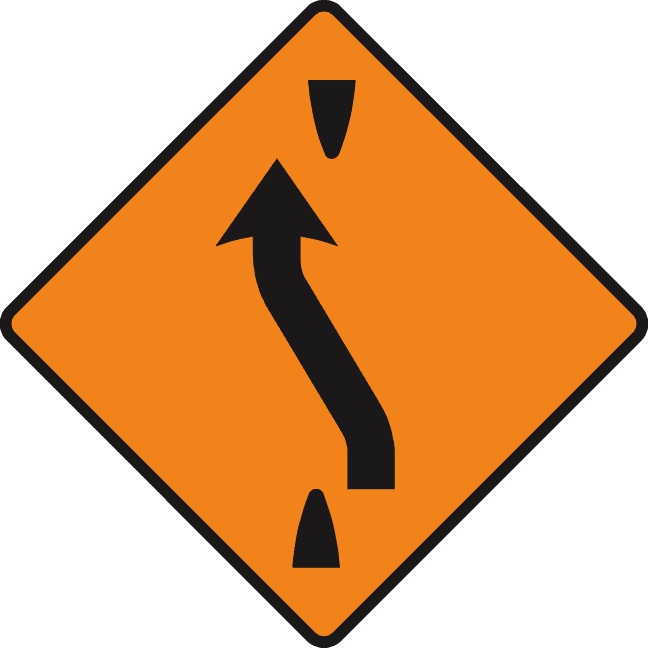 Traffic should cross back to the left-hand lane ahead
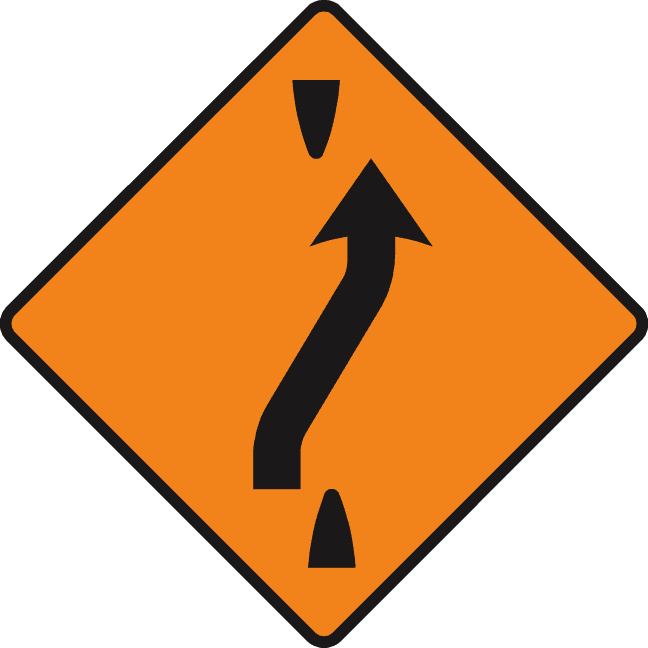 Traffic should cross out to the right-hand lane ahead
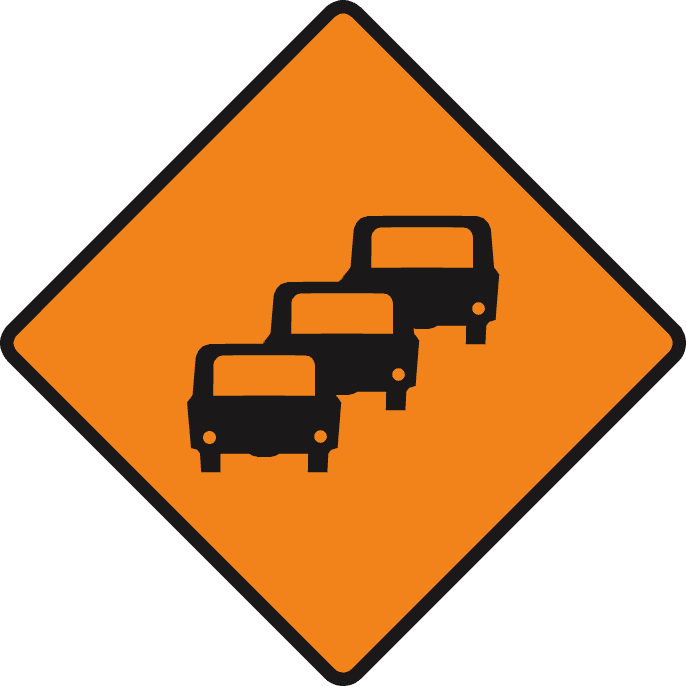 Traffic queues likely ahead
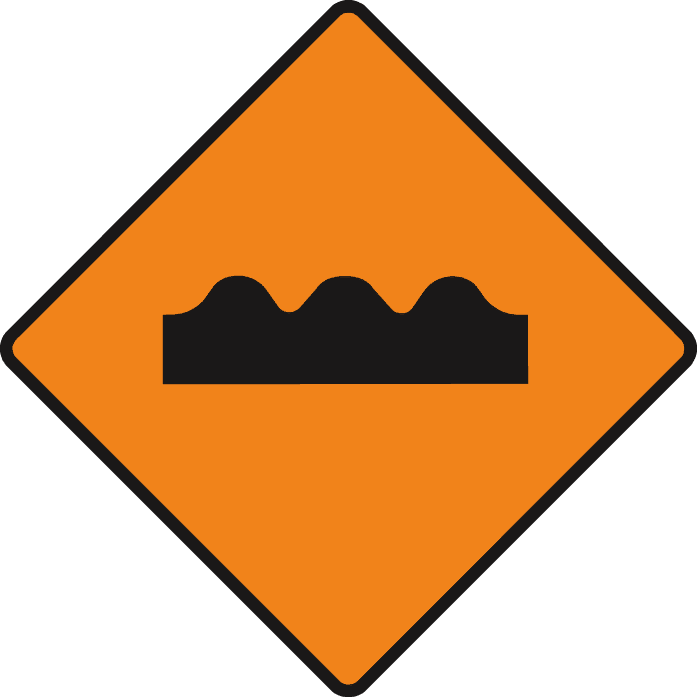 Uneven surface ahead
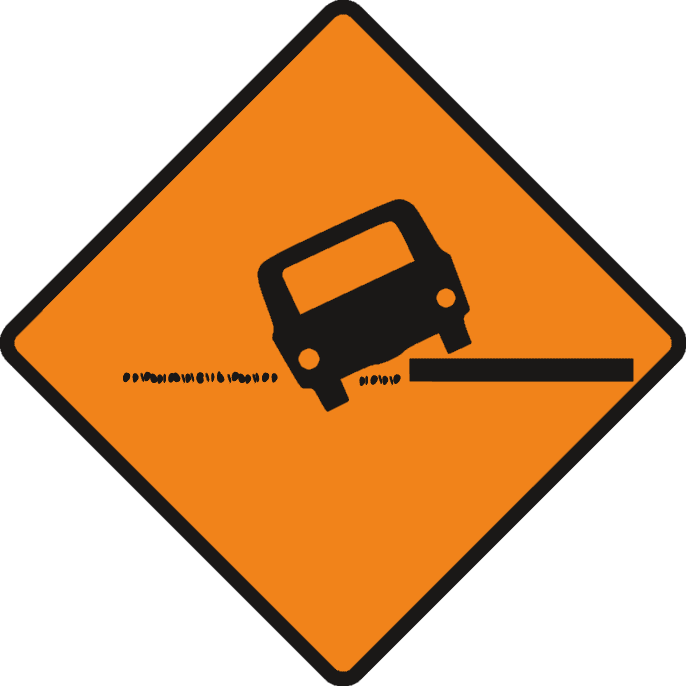 Uneven surface
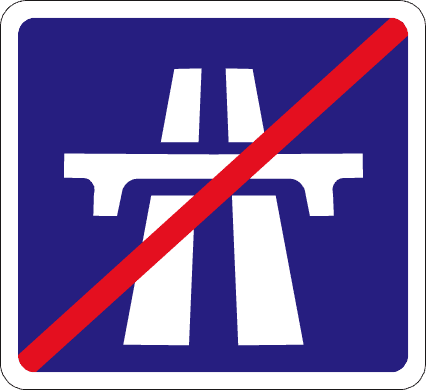
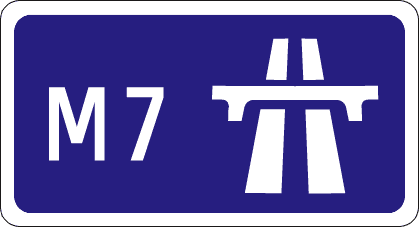
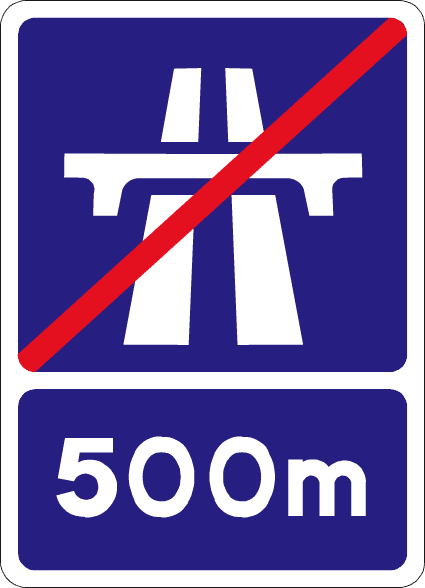
Motorway and toll signs
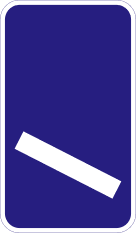
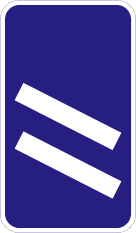
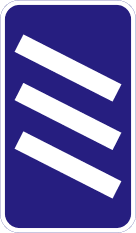
Motorway entry and exit signs, the countdown markers before an exit, and toll plaza lane signs.

Road markings
White lines, yellow lines, box junctions and crossings painted on the road surface.
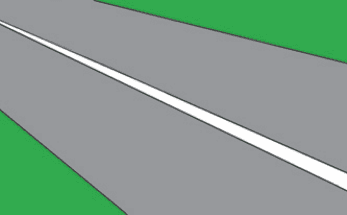 All traffic must keep to the left of the white line
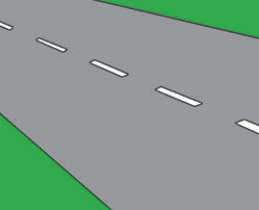 A driver must not cross the broken white line unless it is safe to do so
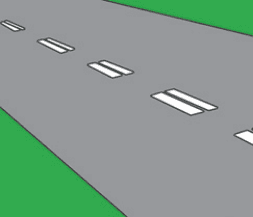 Continuous white lines ahead
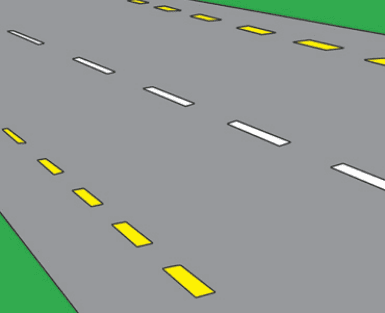 The edge of the carriageway or hard shoulder
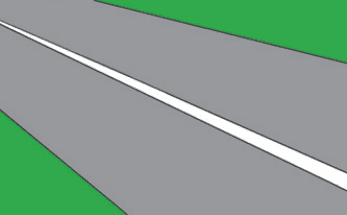 Drivers must keep left of the continuous white line
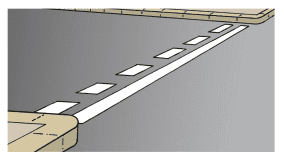 No entry
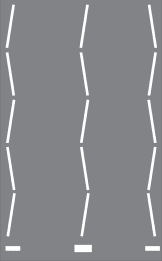 No parking in this area
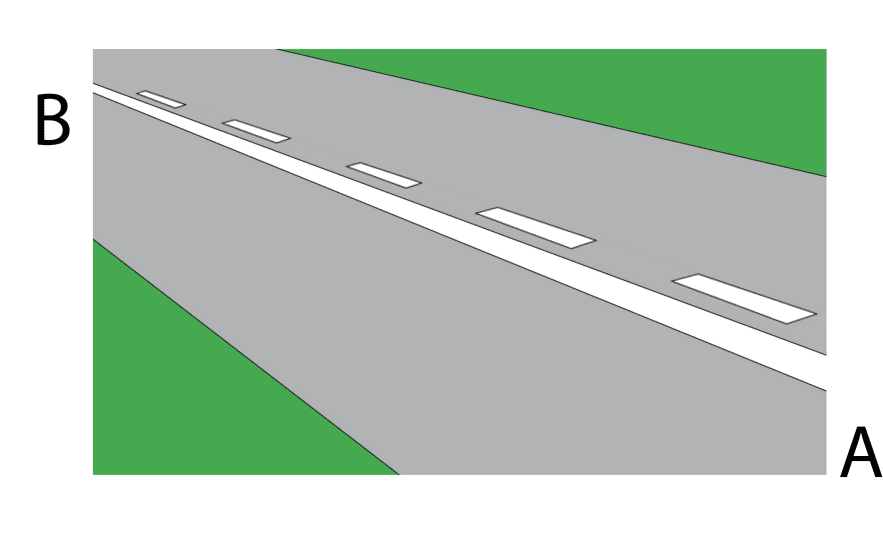 A driver may not cross the lines to overtake
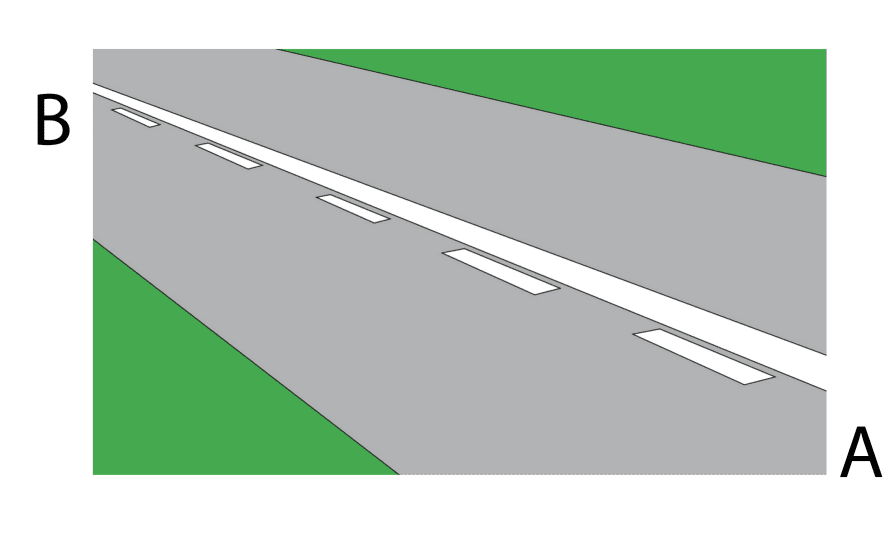 A driver may overtake if it is safe to do so
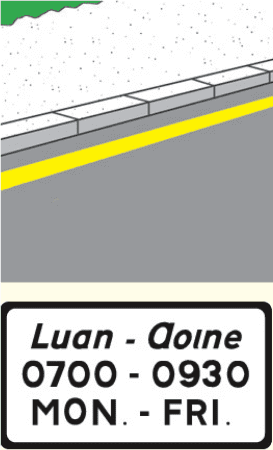 Parking not allowed at the times and days shown
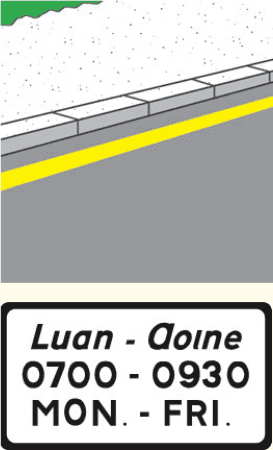 Parking not allowed at the times shown
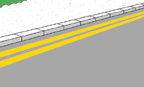 Parking prohibited at all times
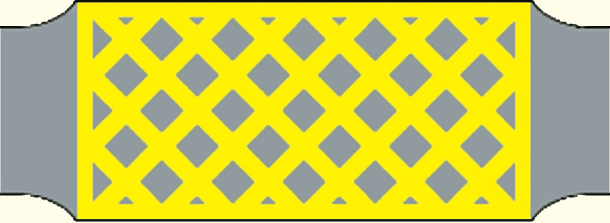 Traffic must not enter unless they can clear the box junction without stopping, or when turning right
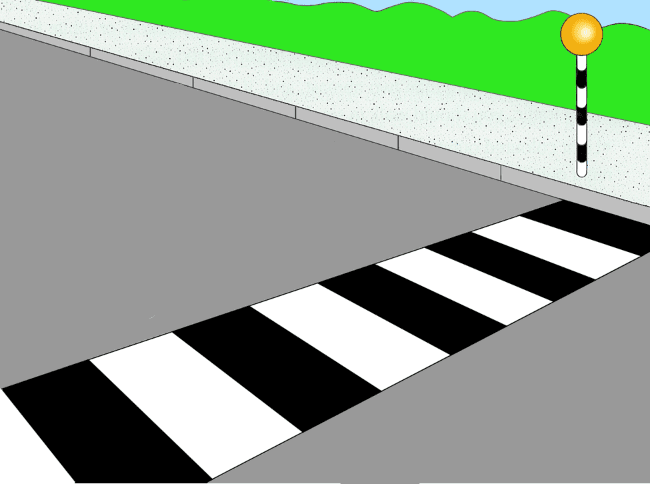 Zebra crossing
Traffic lights
What each traffic light and filter arrow allows a driver to do.
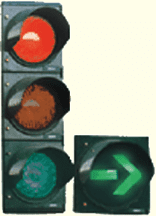 The driver may proceed in the direction of the green arrow if the way is clear
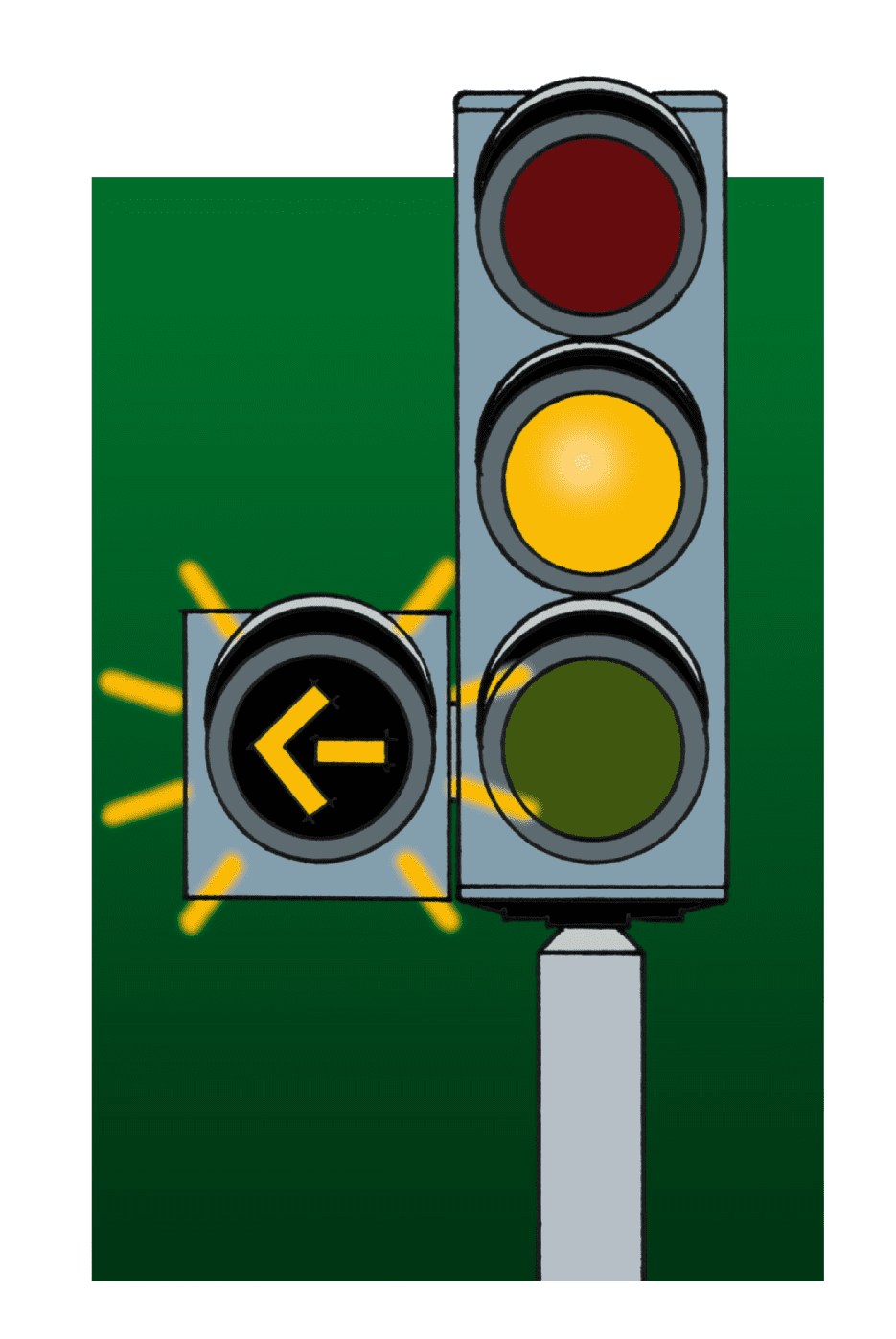 A driver may turn left but yield to traffic on the other road
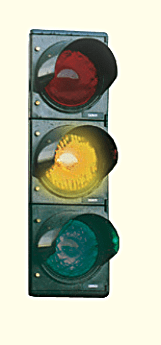 Stop, unless it is unsafe to do so
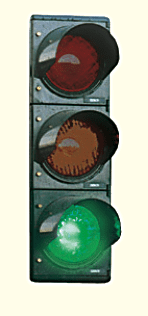 Traffic may proceed if the way is clear
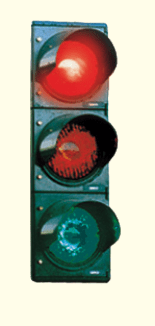 Traffic must stop at the traffic light
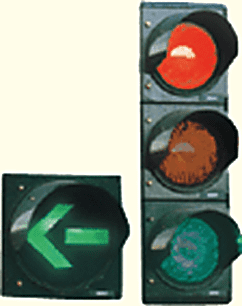 Traffic turning left may proceed if the way is clear
Test yourself on road signs
Answer all 150 road sign, marking and traffic light questions one at a time. Free, and no account needed.
Start the road signs quiz