Managing Risk: theory test questions
99 questions from the Irish Driver Theory Test, each with the correct answer and an explanation.
- While driving, a driver notices a strong smell of fuel. What should they do?Answer: Stop where safe and investigate.
- With regard to tyres, what should a driver do before starting a long journey?Answer: Check the tyres are inflated to normal air pressure.
- Who should first be contacted where a person has been injured in a collision?Answer: The emergency services.
- What danger can arise from the power take-off shaft of a tractor?Answer: If it is not covered, clothing can get caught in it.
- A driver wishes to drive at night, but the off-side (right-hand side) headlight bulb is blown. What should the driver do?Answer: Not drive until the bulb is replaced.
- In order to inform the emergency services of a crash what telephone number should be called?Answer: 112
- If a driver notices that structural parts of their vehicle’s body have been affected by rust, what should they do?Answer: Have it repaired by a competent repair shop.
- How does the driver know the vehicle’s total load-carrying capacity?Answer: By referring to the vehicle manufacturer's specification.
- On a motorway, when should a driver use the hazard warning lights?Answer: When the vehicle has broken down.
- Generally what lighting must a car, tractor or works vehicle have when driving?Answer: Headlights, front and rear side lights, rear number plate light, red rear reflectors, brake lights and indicators.
- Can a child under the age of 3 years be carried unrestrained in the vehicle’s front passenger seat.Answer: No, an infant must always be restrained in the correct child seat.
- If a vehicle breaks down on a motorway, what should a person do?Answer: Use a roadside phone to contact Gardaí and never try to carry out repairs yourself.
- What effect could hitting or mounting the kerb have on a vehicle’s tyres?Answer: It could damage the sidewalls.
- What is the purpose of the red reflectors at the rear of a vehicle?Answer: They reflect light at night to make other road users aware of the vehicle.
- What is good basic first aid for a person who has been burned?Answer: Apply cold water to the burn.
- What does this light mean?Answer: Low engine oil level.
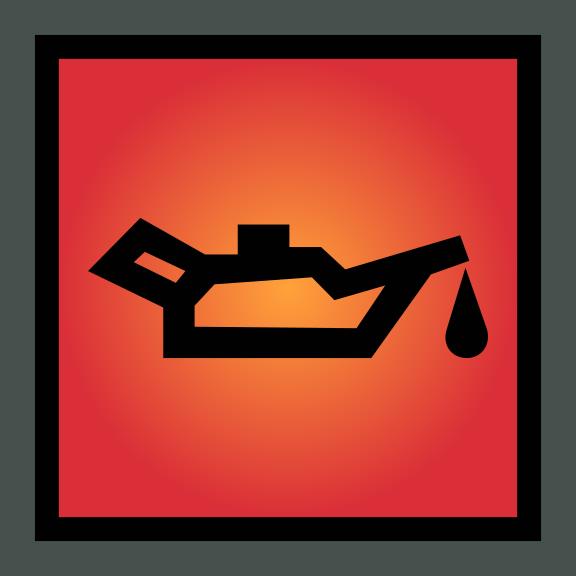
- What determines the maximum allowed towing capacity of a vehicle?Answer: The manufacturer's specifications.
- What effect do the hazard warning lights have on the brake lights?Answer: They have no effect.
- What effect could an unevenly distributed load have on a vehicle?Answer: It could make the vehicle unstable while turning.
- What should a driver do if involved in an incident where there is damage to property only?Answer: It is not necessary to report it to the Gardaí provided it has been reported to the property owner.
- What should a driver do if they arrive at the scene of a collision involving a vehicle carrying hazardous materials?Answer: Keep well clear and call the emergency services.
- What should a driver do if a system warning light lights up on the dashboard of their vehicle whilst driving?Answer: Stop and check the problem.
- What would make a pedestrian more visible to a driver at night?Answer: Wearing a hi-vis jacket.
- When attaching a trailer to their vehicle, what must a driver check?Answer: That the load is evenly spread.
- What should a driver do if a red system warning light lights up on the dashboard of their vehicle?Answer: Stop and investigate the cause.
- Why is it important to ensure that the vehicle headlights are correctly aligned?Answer: To enable the driver to see properly.
- Which of the following is a driver required to keep in good condition?Answer: Seatbelts.
- Which of the following statements is true in relation to tyre pressure and driving on a motorway?Answer: The driver should ensure that tyre pressure is correct, in line with the manufacturer's recommendations.
- Why should a driver adjust their head restraint before starting a journey?Answer: To provide support to the neck in the event of a collision.
- When should a driver use their vehicle’s hazard warning lights?Answer: When broken down and causing an obstruction.
- How can sunlight affect visibility in a car with grimy windows?Answer: It can seriously reduce visibility.
- What does the load index of a tyre indicate?Answer: The maximum load a tyre can carry.
- What is the most common cause of heavy steering?Answer: Under-inflated tyres.
- When should a driver use their vehicle’s hazard warning lights?Answer: When causing an unavoidable obstruction.
- If, when driving along, the driver notices that the engine power is lower than normal, what should they do?Answer: Have the vehicle checked by a competent person.
- Under what circumstances would a driver increase the air pressure in the tyres?Answer: When taking a journey with additional passengers.
- What does worn tread along the edge of the inside of a tyre suggest?Answer: Steering alignment may be faulty.
- What should a driver do where a person has been injured in a collision?Answer: Move the victim only if there is a risk of fire or further injury.
- What should a driver do if condensation is affecting the vehicle’s windows?Answer: Dry the windows with a cloth and then use the demister system.
- What should a driver do to reduce the risk of neck injury in the event of a rear-end collision?Answer: Use a properly adjusted head restraint.
- Where an injured person is discovered lying in the road, when should they be moved?Answer: If the person needs CPR.
- In general, how frequently should a vehicle’s lights be checked?Answer: Daily before driving.
- Who is responsible for ensuring that a child wears a child restraint system in a vehicle?Answer: The driver only.
- What does this light mean?Answer: The battery is not charging.

- During a weekly check, a driver notices a badly worn front tyre. What should the driver do?Answer: Have the worn tyre replaced.
- Who is responsible for ensuring that a passenger over 17 years of age is wearing a seat belt while travelling in a car?Answer: The passenger only.
- What danger could be associated with driving a tractor and trailer over a humpbacked bridge?Answer: The trailer could become detached.
- While driving, the driver notices the vehicle temperature gauge showing red. What should they do?Answer: Stop in a safe place and have the problem investigated.
- What should the driver do to secure the vehicle when changing a front nearside (left-hand side) wheel?Answer: Ensure that the vehicle cannot roll when jacked up.
Ready to test yourself?
Answer Managing Risk questions one at a time, check each answer, and revisit your mistakes.
Practise this topic